
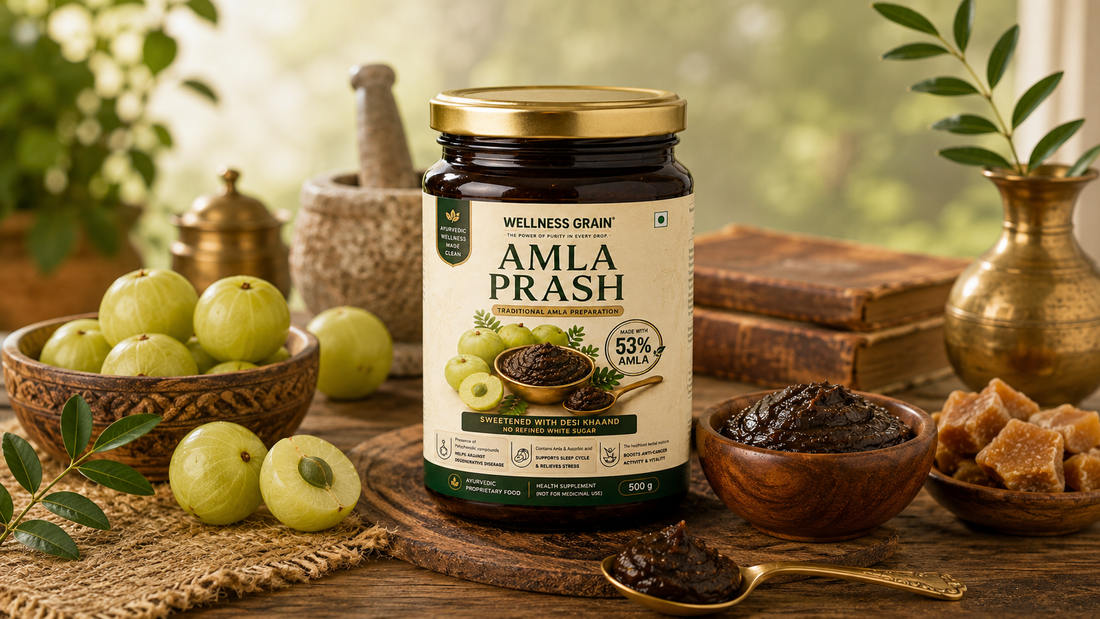
Amla Prash is a traditional Ayurvedic preparation built around amla (Indian gooseberry), one of the most widely used ingredients in Ayurvedic food and wellness traditions. It's typically a thick, jam-like preparation made by slow-cooking amla with natural sweeteners and, in many recipes, a blend of complementary herbs.
What goes into Amla Prash
At its core, Amla Prash is amla-forward — quality preparations are often labelled with their amla percentage, since this varies significantly between products. Wellness Grain's Amla Prash is made with 53% amla and sweetened with desi khaand rather than refined white sugar.
Why amla specifically
Amla has a long history in Ayurvedic tradition and is one of India's richest natural sources of Vitamin C and polyphenolic compounds. Fresh amla is intensely sour and astringent, which is why it's traditionally transformed into preparations like Prash, murabba, and pickles rather than eaten raw in large quantities.
Amla Prash is a food, not a medicine
It's worth being clear: Amla Prash is classified as an Ayurvedic proprietary food / health supplement, not a medicine, and isn't intended to diagnose, treat, or cure any condition. It's best thought of as a traditional daily food, similar in spirit to a jam or preserve.
How it's traditionally eaten
A small spoonful, often taken once daily, either on its own or with warm water or milk. See our full guide on how to eat Amla Prash for specifics.
What to look for in a quality Amla Prash
- A clearly stated amla percentage
- Natural sweeteners like desi khaand or jaggery instead of refined sugar
- Minimal, recognisable ingredients
- Clear labelling as an Ayurvedic proprietary food
Explore this topic further
- Amla Prash benefits for immunity
- Amla Prash for hair and skin
- Amla Prash vs Chyawanprash
- How to eat Amla Prash
- Amla Prash for digestion
- Amla Prash for stress and sleep
- Why desi khaand instead of refined sugar
- Is Amla Prash safe for kids and elderly?
- Amla vs sea buckthorn
Explore Wellness Grain's Ayurvedic range
This article is for general wellness information and isn't a substitute for medical advice.


