
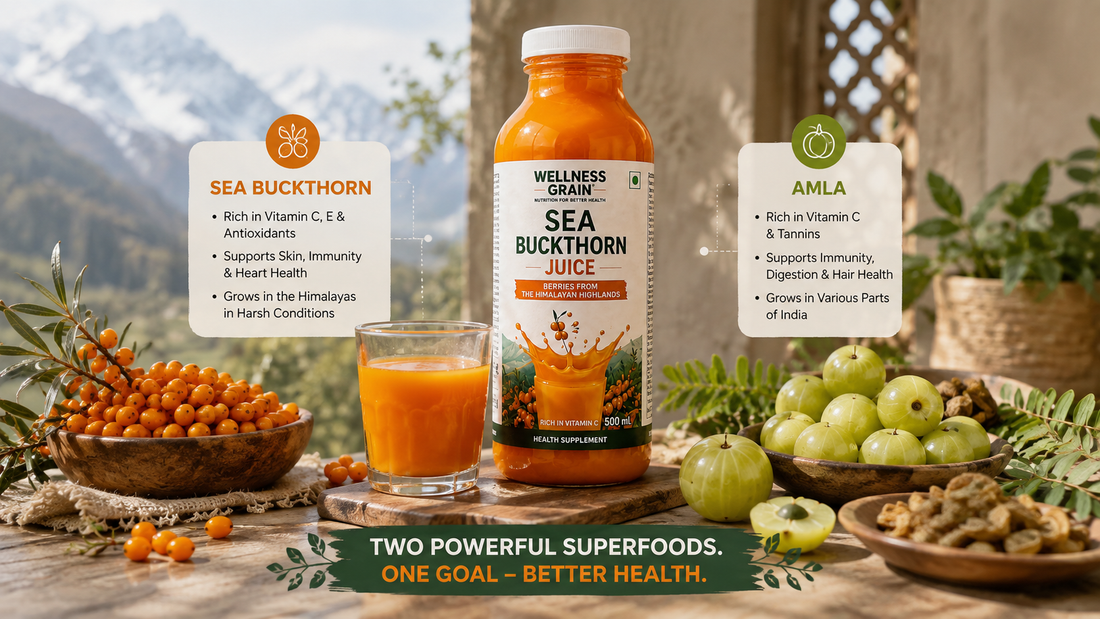
Sea buckthorn and amla (Indian gooseberry) are two of India's best-known Vitamin C-rich berries, but they couldn't come from more different places — one from the cold Himalayan highlands, the other from warmer plains and forests across the country. Here's how they compare.
Origin
Sea buckthorn grows wild at high altitude in cold regions like Ladakh. Amla trees grow across much of India in warmer, lower-altitude climates, and have a much longer history in mainstream Indian food and Ayurveda.
Nutrient profile
Both are notably rich in Vitamin C. Sea buckthorn additionally carries a distinctive blend of Omega 3, 6, 7 and 9 fatty acids, which is unusual for a fruit. Amla is more commonly discussed in Ayurvedic tradition alongside a wider set of herbs and preparations, such as in Amla Prash.
How they're typically consumed
- Sea buckthorn: usually as a juice, diluted in water, tea, or smoothies
- Amla: eaten fresh, dried, as juice, or traditionally prepared into jams and preserves like Amla Prash
Flavour
Sea buckthorn is tart and sour, closer to cranberry. Amla is sharply sour and astringent on its own, which is part of why it's traditionally combined with jaggery or khaand into sweeter preparations.
Which should you choose?
They're not really competitors — many people use both. If you want a concentrated fatty-acid-and-Vitamin-C juice, sea buckthorn is the more unique option. If you're drawn to traditional Ayurvedic preparations with a wider herbal base, amla-based products like Amla Prash are worth exploring.
Related reading
- Sea buckthorn juice: the complete guide
- What is Amla Prash? A complete guide
- Amla vs sea buckthorn: which should you choose?
Shop Wellness Grain Sea Buckthorn Juice
This article is for general wellness information and isn't a substitute for medical advice.


