
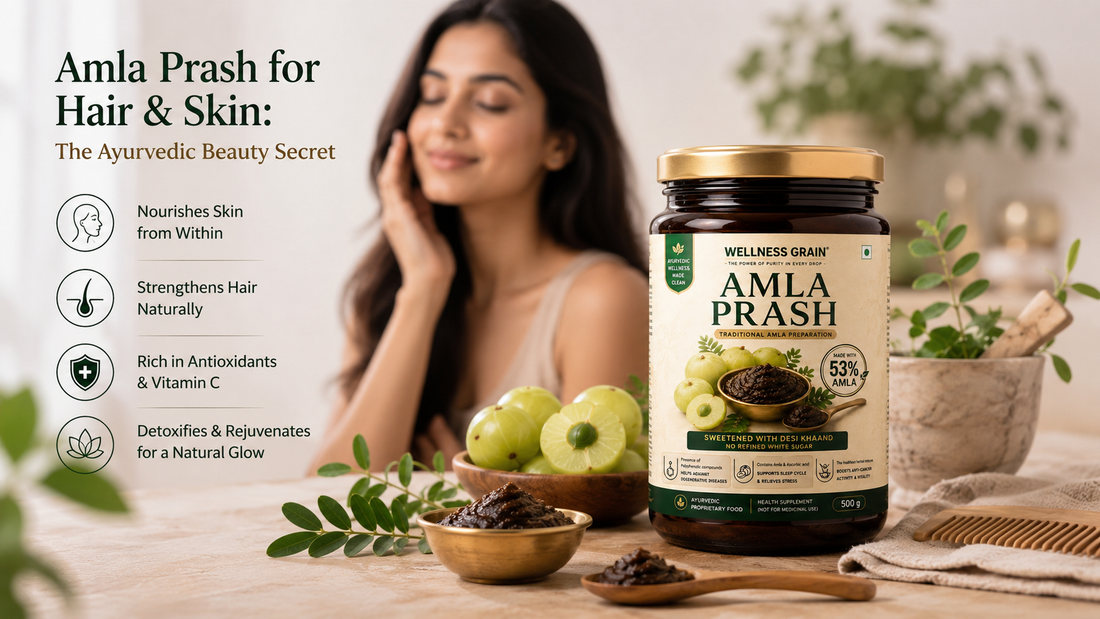
Long before amla oil became a mainstream haircare ingredient, amla itself — eaten, not just applied — was a staple of Ayurvedic beauty tradition. Amla Prash carries that same ingredient into an easy daily food.
Why amla is linked to hair and skin in Ayurveda
Ayurvedic tradition has long paired amla with hair and skin care, both topically (in oils) and internally (through diet). The fruit's Vitamin C and polyphenol content are generally the compounds cited for this traditional association.
Vitamin C's role
Vitamin C is involved in the body's natural collagen production process, which is relevant to skin. Amla's naturally high Vitamin C content is one reason it's held in such regard in traditional beauty practices.
An internal complement to topical care
Amla Prash isn't a replacement for a hair oil or skincare routine — it's better understood as an internal, dietary complement to whatever external care you already do, in keeping with the Ayurvedic idea that beauty starts with what you eat.
How to include it
A small daily spoonful, ideally at a consistent time — see our guide on how to eat Amla Prash.
Setting realistic expectations
As with most nutrition-linked habits, visible change (if any) tends to be gradual and depends on your overall diet, sleep, and care routine — not on Amla Prash alone.
Related reading
Explore Wellness Grain's Ayurvedic range
This article is for general wellness information and isn't a substitute for medical or dermatological advice.


