
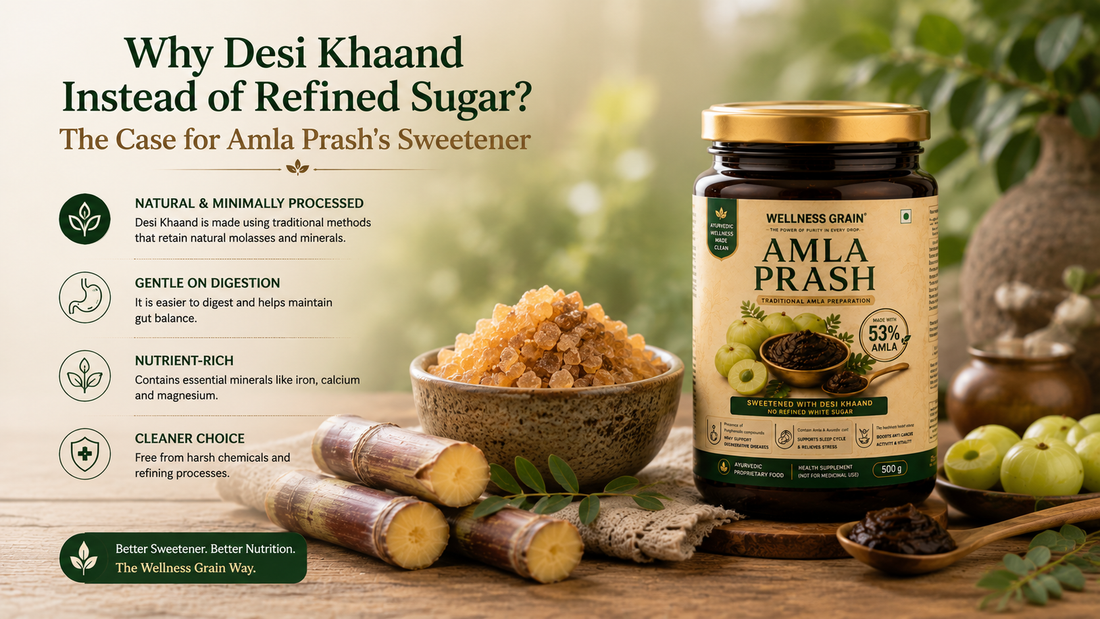
Sugar content is one of the biggest differences between a well-made Amla Prash and a cheaper alternative. Here is why the sweetener matters as much as the amla itself.
What is desi khaand?
Desi khaand is a traditional, minimally processed sugar made from sugarcane juice, retaining more of its natural molasses content compared to fully refined white sugar. It is closer to jaggery in how it is produced than to industrially refined sugar.
Why refined white sugar is a problem in Ayurvedic food
Refined white sugar goes through heavy processing that strips out the natural minerals and molasses present in sugarcane. In Ayurvedic food philosophy, more processed, low-nutrient sweeteners are generally seen as less balancing than traditional ones.
Desi khaand vs jaggery vs refined sugar
- Refined white sugar: heavily processed, stripped of molasses and minerals
- Jaggery: minimally processed, retains molasses, distinct earthy flavour
- Desi khaand: minimally processed granular sugar, retains more natural molasses than refined sugar, milder flavour than jaggery
What this means for Amla Prash
A preparation sweetened with desi khaand instead of refined sugar keeps closer to the traditional, minimally processed approach Ayurvedic food preparation is built on, which is why Wellness Grain's Amla Prash uses desi khaand rather than refined white sugar.
What to check on the label
Look for the sweetener listed clearly as an ingredient. Desi khaand, jaggery, or gur are markers of a more traditional preparation, while sugar alone usually means refined white sugar.
Related reading
Explore Wellness Grain's Ayurvedic range
This article is for general wellness information and isn't a substitute for medical or nutritional advice.


