
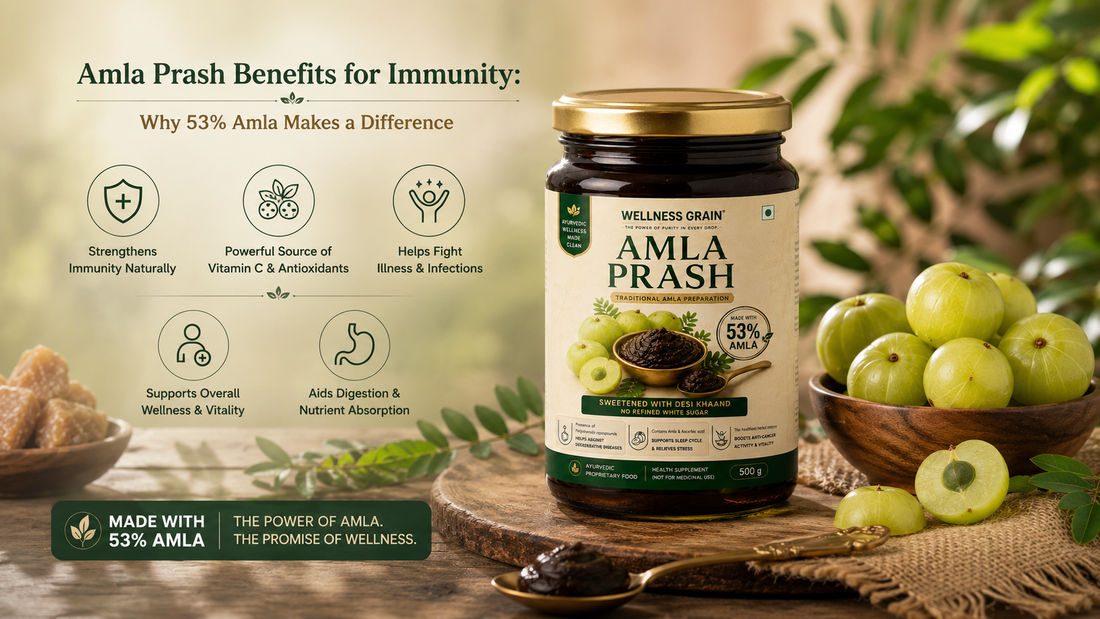
Immunity is the most common reason people reach for amla-based preparations, and it's rooted in the fruit's exceptionally high natural Vitamin C content — among the highest of any commonly eaten fruit.
Why the amla percentage matters
Not all Amla Prash products are made the same way. Some use amla as a minor ingredient in a larger blend; others, like Wellness Grain's, are made with 53% amla, meaning the fruit is the dominant ingredient rather than an afterthought. A higher amla content generally means more of the fruit's natural compounds per spoonful.
What's in amla besides Vitamin C
- Naturally occurring polyphenolic compounds
- Tannins and fibre from the whole fruit
- A tart, astringent profile that's balanced through traditional preparation with khaand or jaggery
A traditional daily habit, not a quick fix
In Ayurvedic tradition, Amla Prash is taken as a small daily habit over time, not a one-off remedy. Consistency, alongside a generally balanced diet, is the traditional approach.
How much to take
See our guide on how to eat Amla Prash for a practical daily serving size.
A note on claims
Amla Prash is an Ayurvedic proprietary food / health supplement — it isn't a medicine and isn't intended to diagnose, treat, or cure any condition. Think of it as a traditional nutrient-dense food to include as part of an overall healthy routine.
Related reading
- What is Amla Prash? A complete guide
- Why desi khaand instead of refined sugar
- Amla Prash vs Chyawanprash
Explore Wellness Grain's Ayurvedic range
This article is for general wellness information and isn't a substitute for medical advice.


