
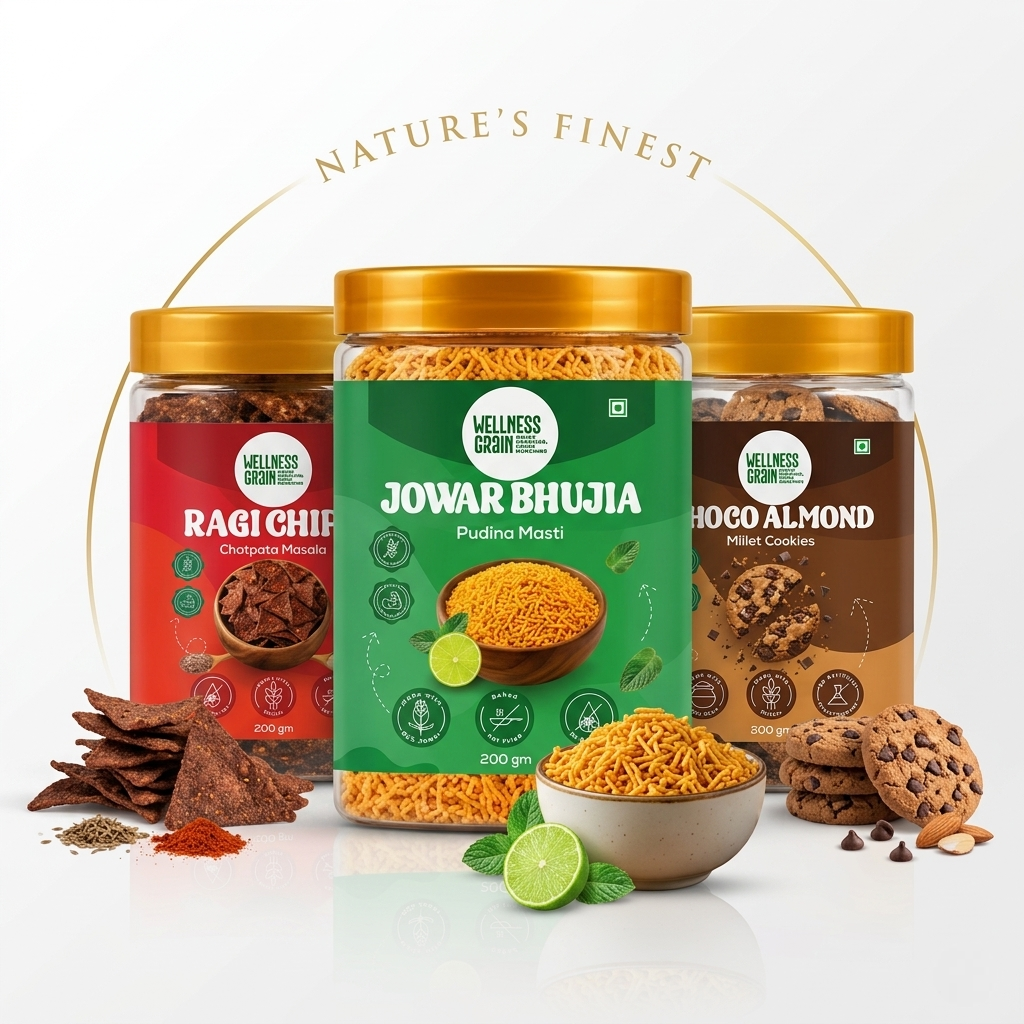
Walk into any Indian kitchen and you will find a snack drawer that tells a story: bhujia for the monsoon, chips for movie night, something sweet for the 5pm slump. For decades, that drawer has run almost entirely on maida, refined oil, and a deep fryer. Something is quietly changing that.
The snack drawer gets a rewrite
Millets, ragi (finger millet) and jowar (sorghum), used to be the grain your grandmother cooked with, not the grain you snacked on. Today they are showing up as chips, bhujia and cookies, baked instead of fried, without maida, and without palm oil. It is the same crunch you grew up loving, just built differently underneath.
Meet the trio
- Ragi Chips - a spiced, crunchy chip made from finger millet, baked rather than deep-fried
- Jowar Bhujia - the classic sev-style bhujia, this time made from sorghum flour with real mint and amchur
- Choco Almond Millet Cookies - a chocolate chip cookie baked in ghee, sweetened with jaggery instead of refined sugar
Why baked instead of fried actually matters
Deep frying is fast and cheap, which is exactly why so much of the Indian snack aisle runs on it. Baking takes longer and costs more, but it means the snack absorbs far less oil, and there is no repeated-oil, high-heat frying process involved. See our deep dive on what actually happens when you bake instead of fry.
Why the grain itself matters
Ragi and jowar are not new. They are among the oldest cultivated grains in India, and they were the everyday grain long before refined wheat flour took over. Bringing them back into snacking is less an invention and more a return. Read more about ragi's journey from grandma's kitchen to the snack jar and what makes jowar such a solid snacking grain.
Where to start
If you are new to millet snacking, start with whichever craving hits first: something crunchy and spiced, something nostalgic, or something sweet. Or just get all three in The Millet Munch Trio and let your snack drawer decide.


