
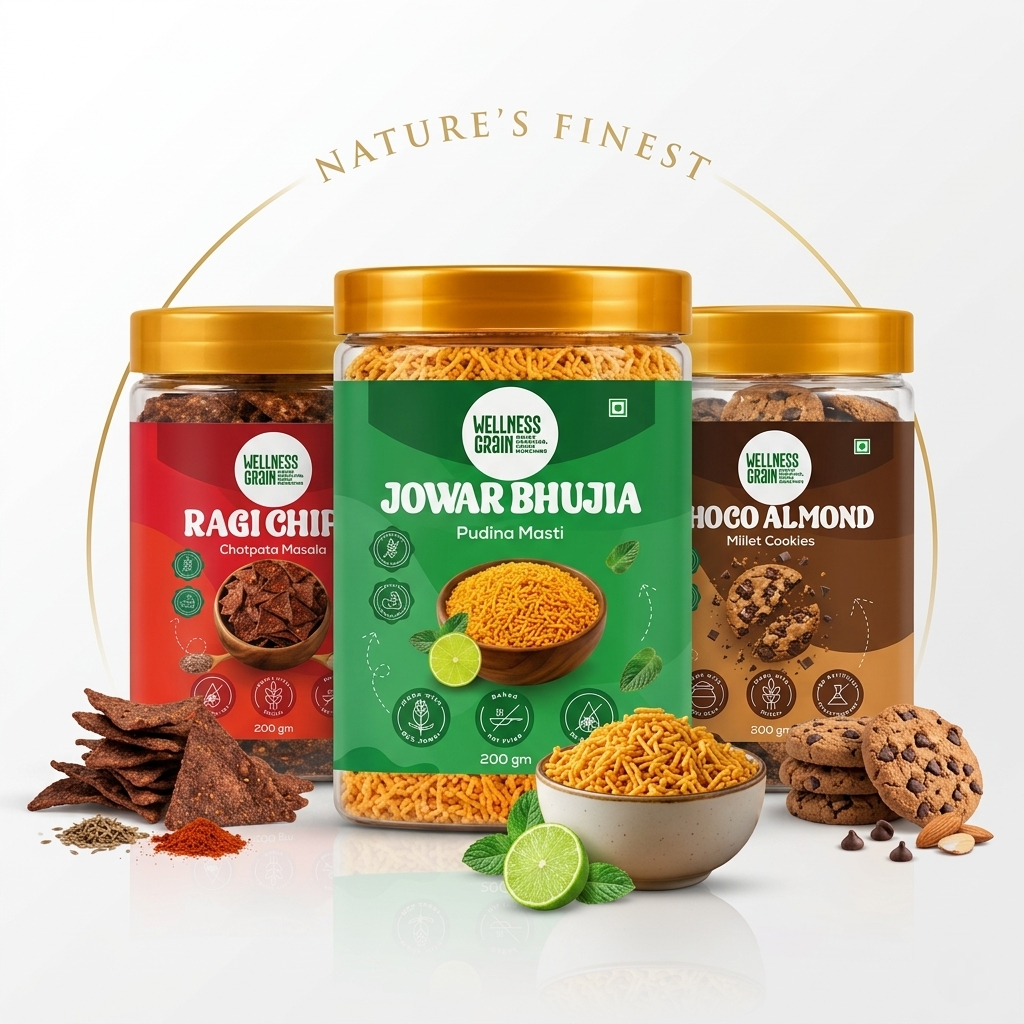
Snack packaging has gotten very good at sounding healthy without actually saying much. "Healthy," "guilt-free," "better choice," all of it means whatever the brand wants it to mean, right up until you flip the pack over and read the ingredients. Two labels that actually mean something specific are zero maida and no palm oil. Here is what they are really telling you.
What maida actually is
Maida is finely refined wheat flour, stripped of the bran and germ during processing, similar to what is called all-purpose or refined flour elsewhere. It is popular in snack manufacturing because it is cheap, has a long shelf life, and gives a very specific soft, smooth texture that is hard to replicate with less processed flours.
Why zero maida is a meaningful claim
Swapping maida for a whole-grain flour like ragi or jowar is not a cosmetic change, it changes the base ingredient the entire snack is built on. It is also genuinely harder to do well, since millet flours behave differently in baking, which is why zero-maida snacks that still deliver a proper crunch are worth taking seriously.
What palm oil actually is
Palm oil is one of the most widely used oils in packaged food globally, largely because it is inexpensive and stable at high, repeated heat, which makes it a default choice for commercial frying.
Why no palm oil is a meaningful claim
Avoiding palm oil usually means a brand made a deliberate, more expensive choice about which fats go into the product, generally paired with baking rather than deep frying in the first place. See our full explainer on what baking versus frying actually changes.
How to actually check a label
- Flip the pack and read the ingredient list, not just the front-of-pack claims
- Look for the specific flour named, ragi, jowar, whole wheat, rather than just "multigrain"
- Check the oil listed, and whether the snack is described as baked or fried
- Be wary of long ingredient lists with names you cannot easily picture as food


