
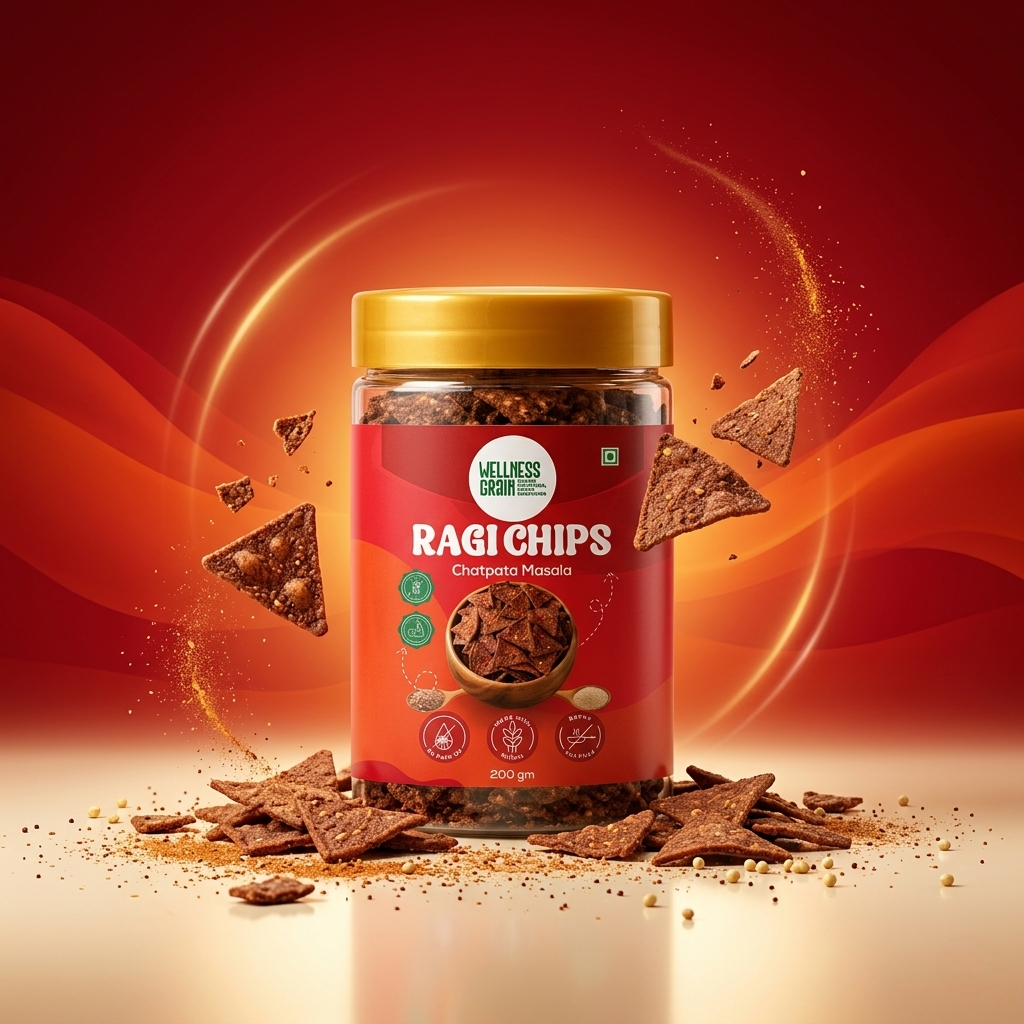
Ragi has an image problem. Say the word and most people picture a grey porridge someone's grandmother insisted they finish, not exactly the stuff of an exciting snack jar. That reputation is a little unfair, and the grain's actual history explains why.
Older than most of what is in your kitchen
Finger millet, ragi's proper name, has been cultivated in India for thousands of years, long before rice and wheat became the everyday default in most households. It was, for most of that history, simply what people ate, not a wellness trend.
So why did it disappear from everyday plates
As rice and wheat became cheaper and easier to mill and distribute at scale through the 20th century, millets like ragi got pushed out of daily diets in a lot of urban India, surviving mostly in specific regional dishes and, yes, that porridge.
What actually makes it a good snacking grain
- A naturally earthy, slightly nutty flavour that holds up well to spice
- A dense, sturdy flour that bakes into a properly crunchy texture rather than a crumbly one
- A long track record as a staple grain, not a recent addition to the food system
From porridge to chips
Turning ragi into a spiced, baked chip is really just giving an old grain a new job. The flavour profile that made it work in savoury regional dishes for centuries is the same thing that makes it work in a baked, spiced chip today.


