
Picture two identical potatoes. One goes into a fryer at high heat for a few minutes. The other goes into an oven for longer, at a gentler heat. They end up looking similar. What happened to them on the way there is not similar at all.
What frying actually does
Deep frying works by submerging food in oil heated well above boiling point, which cooks it fast by driving out moisture and letting the food absorb oil in its place. That absorbed oil is a big part of why fried snacks are calorie-dense, and why the same oil, reused batch after batch at a snack factory, is a genuine quality concern.
What baking actually does
Baking cooks food with dry, circulating heat instead of submerging it in fat. Some oil is usually still used for flavour and texture, but nowhere near the quantity a food absorbs when it is fully submerged and fried.
Why this matters for palm oil specifically
Palm oil is a common choice for commercial frying because it is cheap and holds up well to repeated high heat. That is a manufacturing convenience, not a quality feature, which is part of why "no palm oil" is a label worth actually reading, not skipping past. We break this down further in decoding snack labels.
Does baked really taste as good?
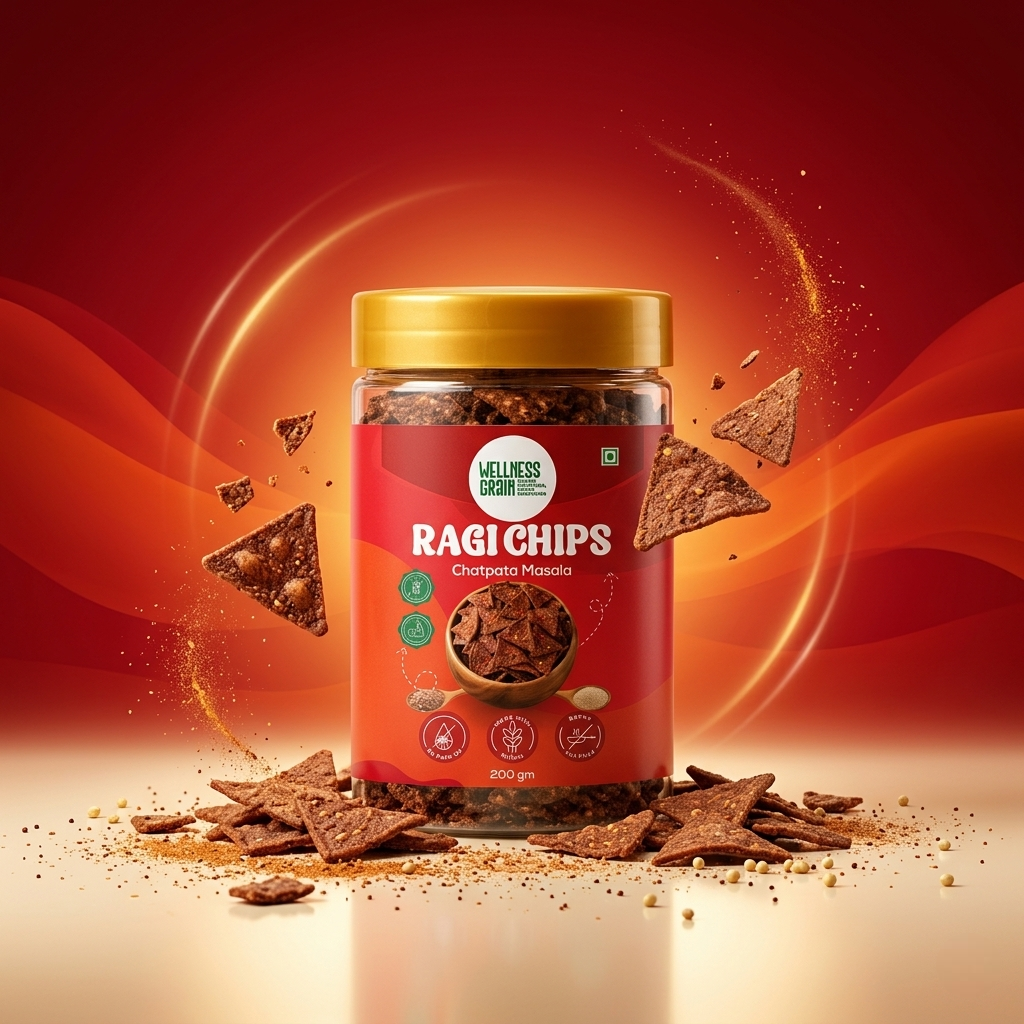
This is the fair objection, and the honest answer is: it depends entirely on how it is done. A rushed, under-seasoned baked snack will taste like a compromise. A properly developed one, like Ragi Chips or Jowar Bhujia, is built specifically to close that gap rather than accept it.
The takeaway
Baked and fried are not just two cooking methods with the same result. They change how much oil ends up in the final snack, and how that oil was treated before it got there. That is worth knowing next time you are choosing between two packets that look almost identical on the shelf.


