
Introduction
With the growing popularity of A2 ghee, Indian consumers are increasingly confronted with labels claiming “pure,” “desi,” or “traditional” ghee. However, not all ghee sold as A2 or bilona truly follows traditional preparation methods.
Understanding how to identify pure A2 Gir cow bilona ghee is essential for making informed choices—especially when ghee is a daily kitchen staple. This guide explains the key authenticity markers that separate genuinely traditional ghee from mass-produced alternatives.
For a complete foundation on bilona preparation, you can start with our master guide:
👉 What Is A2 Bilona Ghee? Process, Benefits & Authenticity Explained
Why Identifying Authentic A2 Ghee Matters
The difference between authentic bilona ghee and industrial ghee is not always obvious from packaging alone. Many products use similar terminology while relying on faster, modern production methods.
Authenticity matters because:
-
Preparation method affects aroma, texture, and cooking behavior
-
Traditional ghee aligns more closely with Indian dietary practices
-
Transparency helps consumers avoid misleading claims
Knowing what to look for empowers buyers to choose ghee that matches their expectations.
1. Check the Cow Breed Mentioned on the Label
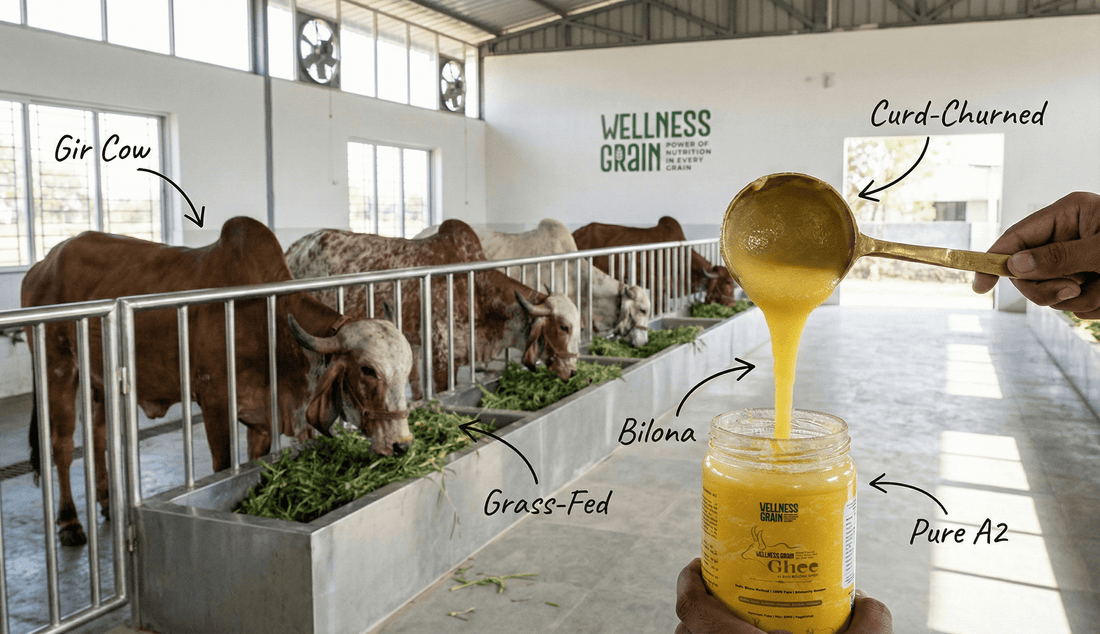
Authentic A2 ghee is made from milk that naturally contains A2 beta-casein protein, which is found in indigenous Indian cow breeds.
Look for clear mention of:
-
Gir cow (most common)
-
Other indigenous breeds, if specified
If the label only states “cow ghee” without breed clarity, it may not be true A2 ghee.
2. Look for the Bilona or Curd-Churned Method
The bilona method is a defining feature of traditional A2 ghee.
Authentic bilona ghee should mention:
-
Made from curd, not cream
-
Hand-churned or traditionally churned
-
Slow-cooked at low temperatures
Industrial ghee typically skips fermentation and uses cream separators instead.
For a step-by-step explanation of this process, refer to
👉 What Is A2 Bilona Ghee?
3. Observe the Texture and Appearance
While texture can vary with temperature, traditional bilona ghee often shows:
-
A grainy or granular texture in cooler weather
-
A smooth liquid form when warm
-
A natural golden-yellow color (not stark white or overly pale)
Texture alone should not be the sole deciding factor, but it can offer useful cues when combined with other indicators.
4. Notice the Aroma and Taste
Authentic bilona ghee typically has:
-
A rich, nutty aroma
-
A depth of flavor that lingers slightly when heated
Ghee produced using high-temperature industrial methods often smells neutral or flat by comparison.
5. Evaluate Transparency from the Brand
Reputable brands clearly explain:
-
Cow sourcing and diet (grass-fed vs grain-fed)
-
Preparation method
-
Batch size or small-batch production
-
Food safety registration and lab testing
Transparency in communication is often a stronger sign of authenticity than packaging claims alone.
Brands that openly discuss sourcing and preparation—such as
👉 A2 Gir Cow Bilona Ghee
allow consumers to make informed decisions.
6. Verify Food Safety and Compliance
Authentic ghee sold in India should include:
-
FSSAI registration number
-
Manufacturing and packaging details
-
Clear shelf-life information
While certifications do not guarantee traditional preparation, they indicate regulatory compliance and accountability.
Common Misconceptions About A2 Ghee
-
“All desi ghee is A2” – Not necessarily; cow breed matters.
-
“Organic means bilona” – Organic refers to feed, not method.
-
“Higher price always means better ghee” – Price alone is not a reliable indicator.
Understanding these distinctions helps avoid confusion.
Conclusion
Identifying pure A2 Gir cow bilona ghee requires looking beyond labels and marketing terms. By focusing on cow breed, preparation method, transparency, and sensory cues, consumers can make more informed choices that align with traditional Indian food practices.
Education—not assumptions—is the key to selecting authentic ghee in a crowded marketplace.


