
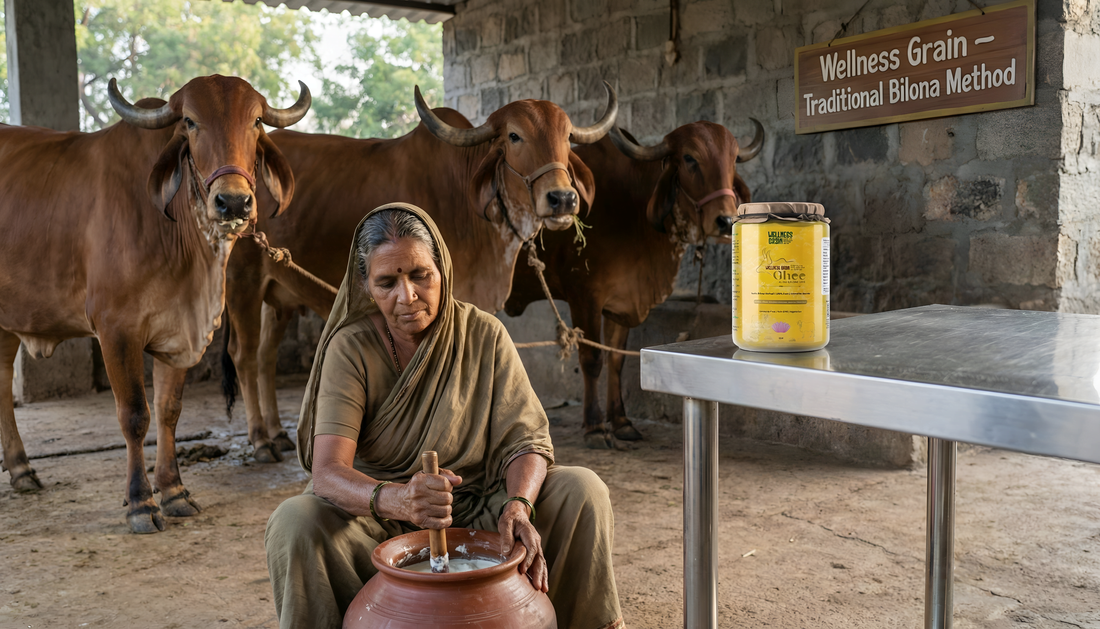
In Indian households, ghee has always been more than just a cooking fat—it is tradition, nourishment, and medicine combined. Among the many types available today, A2 Bilona Ghee has gained renewed attention for its purity, digestibility, and alignment with ancient Indian practices.
But what exactly makes A2 Bilona Ghee different from regular ghee? Why does the method of preparation matter so much? And how can you identify authentic A2 ghee in a market filled with misleading labels?
This comprehensive guide explains what A2 Bilona Ghee is, how it is made, its benefits, and how to ensure you’re choosing the real thing.
What Is A2 Bilona Ghee?
A2 Bilona Ghee is a traditional Indian ghee made exclusively from the milk of indigenous A2 cows, such as the Gir cow, using the bilona method.
The term A2 refers to the type of beta-casein protein naturally present in the milk of indigenous Indian cows. This protein structure is considered easier to digest compared to A1 beta-casein found in many crossbred or foreign cow varieties.
The term Bilona describes the traditional curd-churning method, where ghee is made from fermented curd rather than directly from cream. This slow, manual process has been practiced in Indian households for centuries and is deeply rooted in Ayurveda.
👉 Authentic products like
A2 Gir Cow Bilona Ghee
follow this exact process without industrial shortcuts.
How Is A2 Ghee Made Using the Traditional Bilona Method?
The bilona method is what truly separates authentic A2 ghee from mass-produced alternatives.
Step-by-step process:
-
Fresh A2 Milk Collection
Milk is sourced from indigenous Gir cows, typically grass-fed and free-grazing. -
Natural Fermentation into Curd
The milk is set into curd using traditional cultures, allowing beneficial bacteria to develop. -
Hand-Churning (Bilona)
The curd is hand-churned using a wooden bilona (mathani) to separate butter from buttermilk. -
Slow Cooking of Butter
The butter is gently heated on a low flame until moisture evaporates and pure ghee remains.
To understand why this curd-based process matters so much, read our detailed explanation on
the bilona method of making ghee.
A2 Ghee vs Regular Ghee: What’s the Real Difference?
Many products on shelves are labelled simply as “ghee,” but not all ghee is made the same way.
| Feature | A2 Bilona Ghee | Regular Market Ghee |
|---|---|---|
| Milk source | Indigenous A2 cows | Often crossbred cows |
| Protein type | A2 beta-casein | A1 or mixed |
| Method | Curd-based bilona method | Cream separation |
| Cooking | Slow, low flame | High-temperature industrial |
| Digestibility | Generally easier to digest | May feel heavy for some |
| Nutrient retention | Higher | Often reduced |
For a deeper comparison, you can explore
A2 ghee vs regular ghee
to understand how processing impacts quality.
Grass-Fed vs Grain-Fed Ghee: Why It Matters
The cow’s diet directly influences the quality of ghee.
Grass-fed cows:
-
Consume natural grasses and fodder
-
Produce milk with a better fatty acid profile
-
Yield ghee with richer aroma and taste
Grain-fed or factory-fed cows often rely on commercial feed, which can alter milk composition.
This is why many traditional brands prefer grass-fed indigenous cows. You can read more in our guide on
grass-fed vs grain-fed ghee.
Benefits of Using A2 Bilona Ghee in Daily Life
When consumed in moderation as part of a balanced diet, A2 Bilona Ghee is valued for:
-
Supporting digestion due to naturally occurring butyric acid
-
Helping absorb fat-soluble vitamins
-
Providing stability for high-temperature Indian cooking
-
Being traditionally used in Ayurvedic diets
For everyday use, many families prefer
pure A2 ghee for daily cooking
because of its stability and traditional preparation.
How to Use A2 Ghee Daily & How to Store It
Daily use:
-
Add a teaspoon to dal, rice, or vegetables
-
Use for sautéing and light frying
-
Consume in moderation as part of meals
Storage:
-
Store in a cool, dry place
-
Refrigeration is not required
-
Always use a clean, dry spoon
Properly prepared A2 ghee remains stable naturally without preservatives.
How to Identify Pure A2 Gir Cow Bilona Ghee in India
With growing demand, misleading claims are common. To identify authentic A2 ghee:
-
Look for bilona (curd-churned) method disclosure
-
Check if the cow breed (e.g., Gir cow) is mentioned
-
Prefer brands that explain sourcing and processing transparently
-
Verify FSSAI registration and lab testing
For a detailed checklist, read
how to identify pure A2 Gir cow ghee
before making a purchase decision


