
India has been turning fruit, spices and fat into spoonable herbal preparations for a very long time. The prash is one of the best-known examples, and the story of how it ended up in your kitchen is worth a few minutes.
The ancient roots
Traditional Ayurvedic texts, including the Charaka Samhita, describe herbal jam-like formulations in a category called rasayana. The most famous is Chyawanprash, which tradition links to the sage Chyawan. The legend says he was restored to youthful vigour by a herbal preparation made by the Ashwini Kumaras, the divine physicians.
Legend versus kitchen reality
Whether you read it as legend or history, the format is clear: a base of amla cooked with sweetener and ghee, with a long list of herbs and spices added. Families made it at home, each with slightly different proportions.
From home kitchen to brand
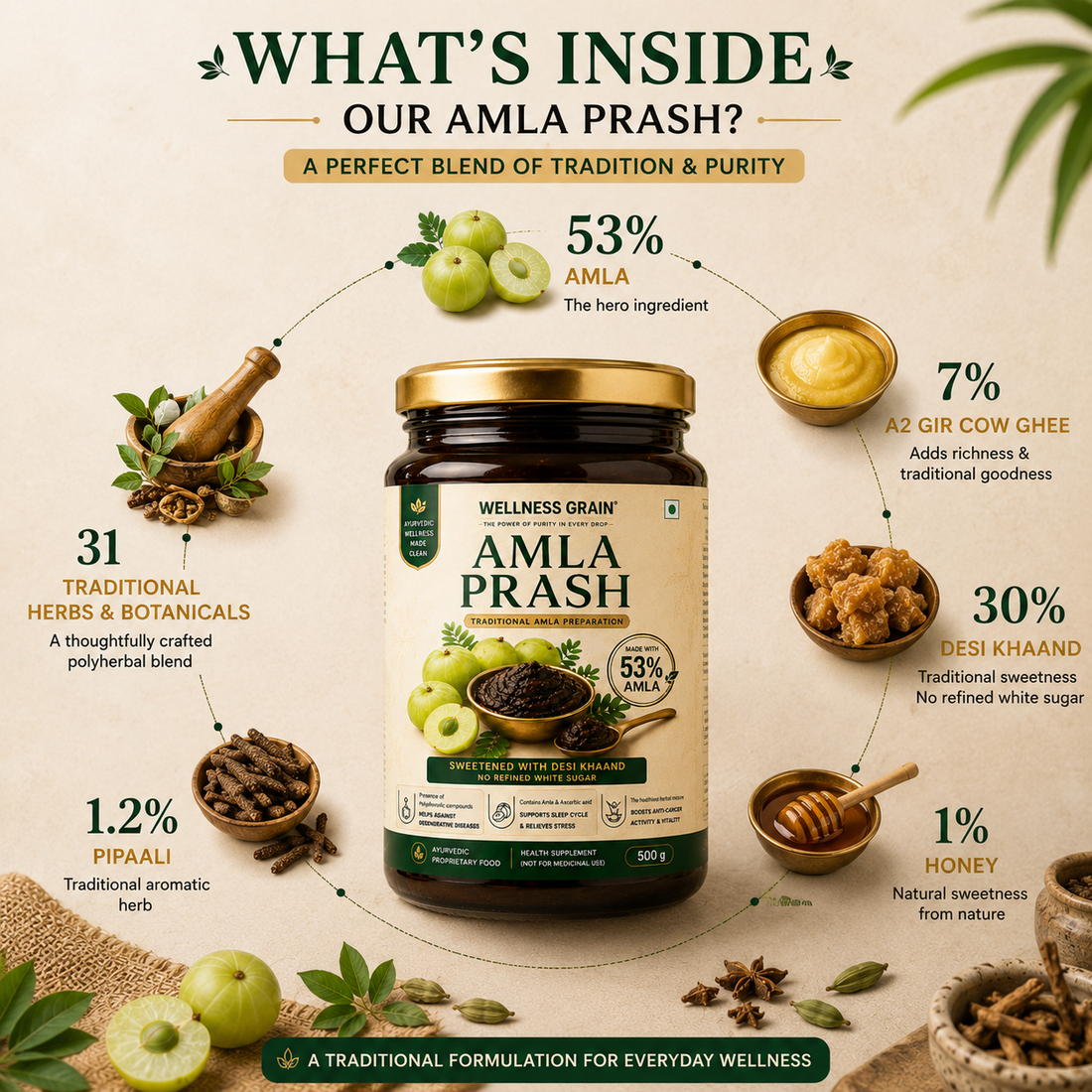
Over time, producers began making prash at scale and selling it in jars. Many variants appeared, with different herb counts, sweeteners and amla percentages. Wellness Grain Amla Prash belongs to this modern lineage, with 53% amla, 31 named herbs and botanicals, A2 Gir cow ghee, desi khaand and honey.
What stayed the same
- Amla as the hero ingredient
- Ghee and sweeteners as the base
- Warming spices and traditional herbs for flavour and tradition
- A small daily spoon as the format
What changed
Packaging, labelling, and a growing need to explain what is actually in the jar, which is why articles like our buyer's checklist exist.
A fair caveat
Historical stories add colour, but they are not proof of health outcomes. Amla Prash is a traditional food and is not offered as a treatment for any condition.
Keep reading
Shop Wellness Grain Amla Prash
This article is for general information and isn't a substitute for medical advice.


