
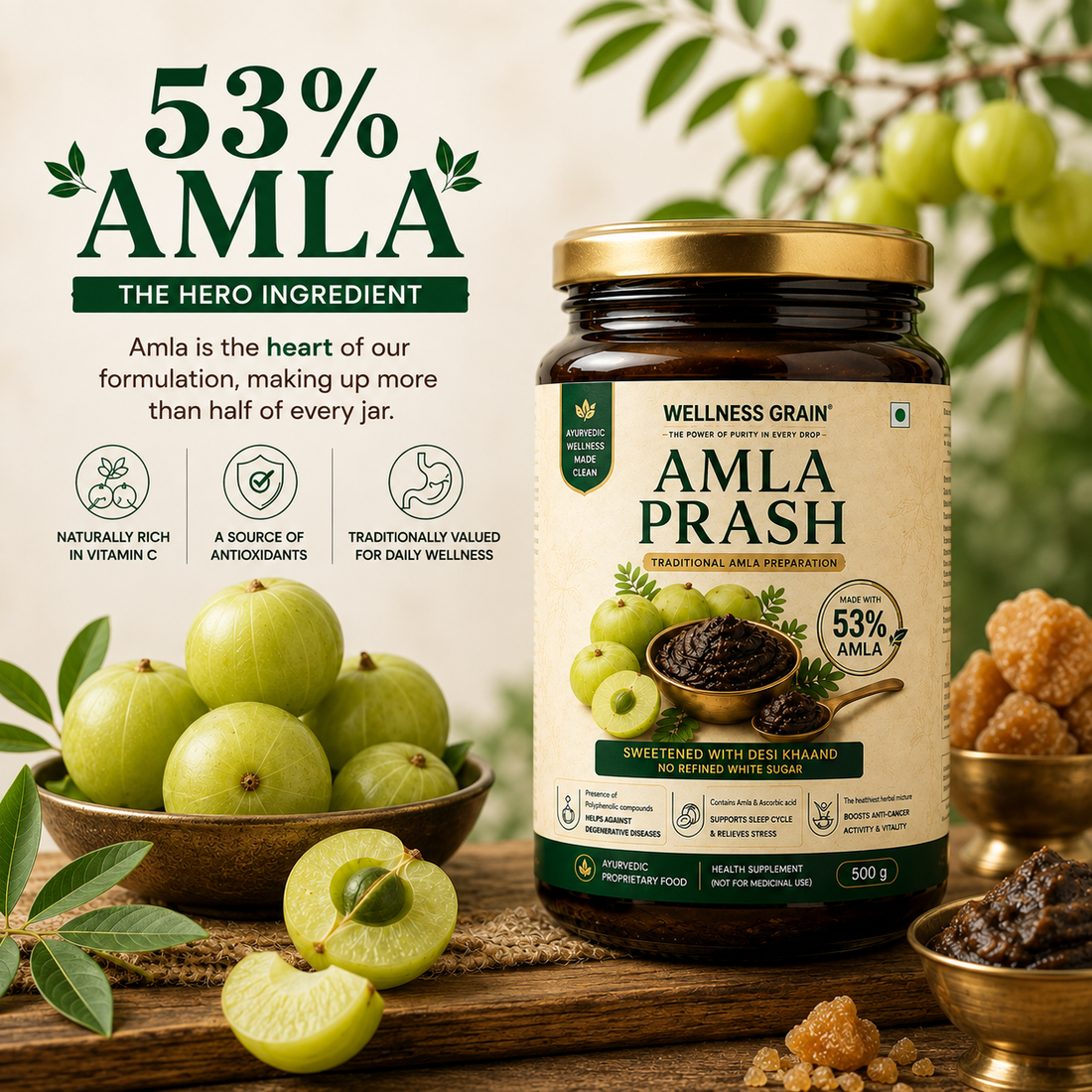
In much of India, the amla tree is more than a fruit tree. It is a festival, a picnic spot, a pickle jar and a few dozen childhood memories rolled into one.
Amla Navami
In many parts of India, the ninth day of the bright fortnight in the month of Kartik, usually in October or November, is marked as Amla Navami, also called Akshaya Navami. People worship the amla tree and many families share a meal under its branches. Practices vary by region, but the tree takes centre stage.
Folklore and symbolism
The amla tree is traditionally associated with Vishnu in several regional traditions, and the fruit appears in old stories, hymns and household lore. Whatever your view, it is a plant that people have honoured for generations.
The pickle jar connection
In many homes, the first sign of amla season is a jar of amla pickle on the windowsill, aamla murabba in the pantry or sun-dried amla candy on a plate. Preservation is the common thread.
Why this matters for a jar of prash
When you eat Amla Prash, you are tasting a fruit that has been woven into Indian life for a long time. Its story lives in festivals, kitchens and family habits, not just in a nutrition label.
A few ways to honour it at home
- Share a pickle or murabba with neighbours during amla season
- Take a family walk under an amla tree if you can find one
- Try a new amla recipe with older relatives and ask for their versions
A note on sources
Traditions differ by region and household, so treat this as a general overview rather than a ritual guide. Our seasonal story explains why the fruit appears when it does.
Keep reading
Shop Wellness Grain Amla Prash
This article is for general information and isn't a substitute for medical advice.


