
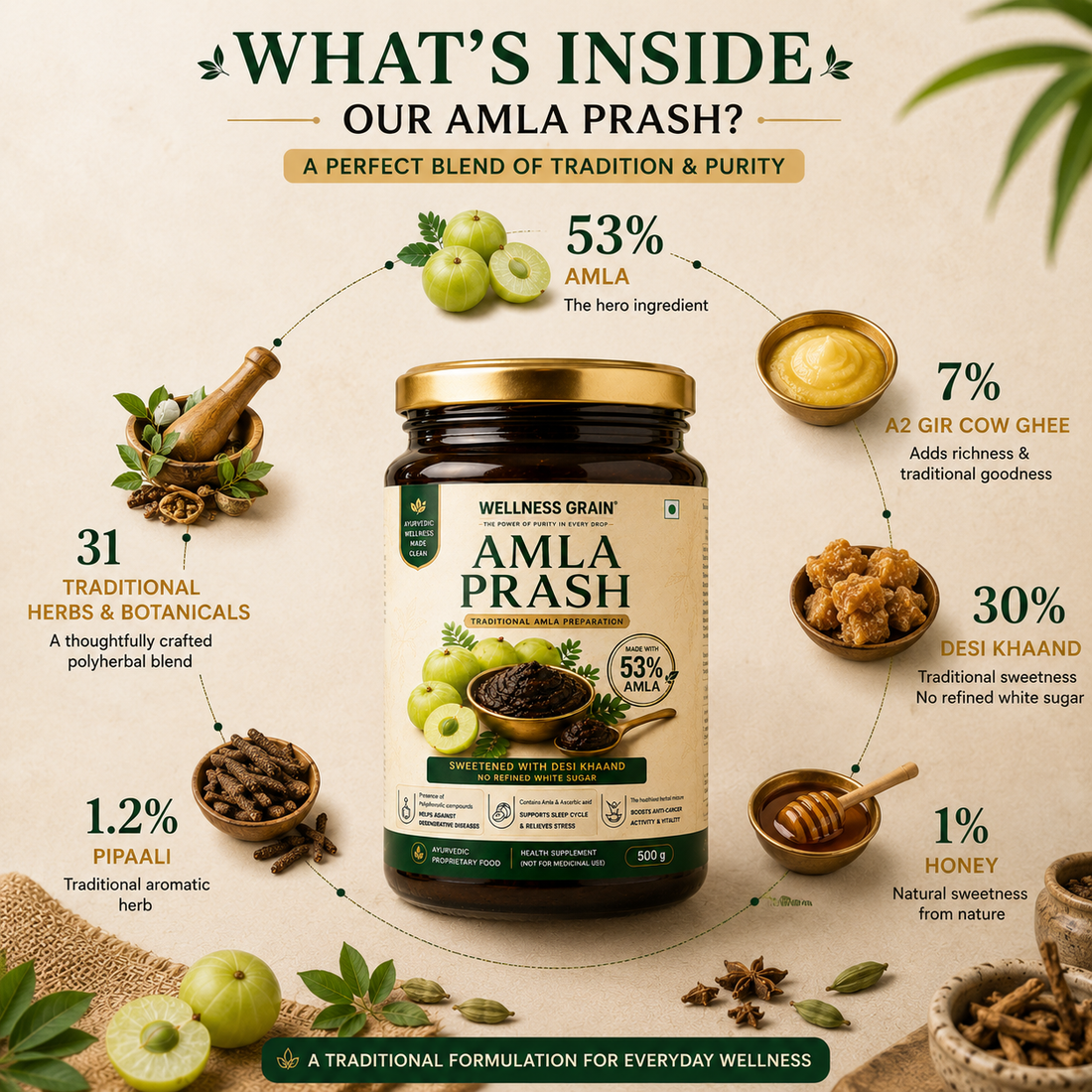
Black pepper gets all the fame. Its cousin, Pippali, gets the footnotes. Yet in Ayurvedic cooking and traditional formulations, Pippali (long pepper, Piper longum) has been a named ingredient for a very long time, and it is one of the herbs listed in Wellness Grain Amla Prash.
What it looks like
Long pepper is not round like peppercorn. It is a small, elongated, catkin-like spike, dried and used whole or ground. Taste it and you get a slow-building warmth, a little sweeter and more floral than black pepper.
Where it shows up in tradition
Pippali appears in many classical Ayurvedic formulations, often alongside ginger and black pepper in a trio known as trikatu. It also turns up in some regional cooking, and long pepper was once a prized trade spice.
Why it makes sense in a prash
A tangy, sweet preparation like Amla Prash benefits from a little warmth in the background. Pippali provides a gentle, lingering heat that keeps the sweetness from feeling flat. This is a flavour reason as much as a traditional one.
A tasting tip
Take a small spoon slowly, let it sit on your tongue and notice the order: first the tang of amla, then the sweetness of khaand and honey, then a faint peppery warmth at the finish. That finish is part of the herb blend at work.
A note on claims
We describe herbs by how they are traditionally used and what they bring to taste. Amla Prash is a food, not a medicine, and herbs in it are not offered as treatment for any condition.
Keep reading
Shop Wellness Grain Amla Prash
This article is for general information and isn't a substitute for medical advice.


