
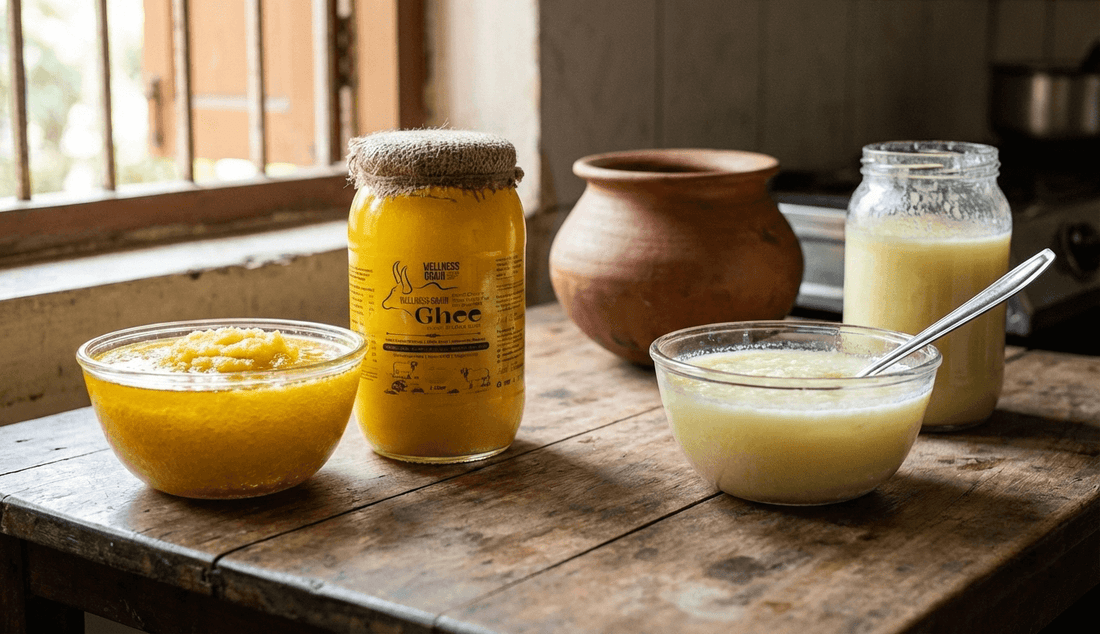
A2 Ghee vs Regular Cow Ghee: What Indian Families Should Really Know
Introduction
Ghee has been part of Indian kitchens for centuries—but today, shelves are filled with different labels: cow ghee, A2 ghee, bilona ghee, regular ghee. Many families ask a simple question: is A2 ghee actually different, or is it just marketing?
This guide breaks down the real differences between A2 ghee and regular cow ghee, without hype—so you can make an informed choice for your family.
What Is A2 Ghee?
A2 ghee is made from the milk of indigenous Indian cow breeds such as Gir, Sahiwal, and Red Sindhi, which naturally produce A2 beta-casein protein.
When prepared using the traditional bilona method, the milk is fermented into curd, hand-churned into butter, and slow-heated into ghee.
This slow, traditional process preserves natural compounds like butyric acid, CLA, and fat-soluble vitamins.
👉 link: What Is A2 Bilona Ghee? Process, Benefits & Authenticity Explained
What Is Regular Cow Ghee?
Regular cow ghee is usually made from the milk of crossbred or foreign cows, which often produce A1 protein.
In most commercial production, cream is separated directly from milk using machines and heated quickly at high temperatures.
While it still qualifies as ghee, the process and milk source differ significantly.
Key Differences Between A2 Ghee and Regular Ghee
| Factor | A2 Bilona Ghee | Regular Cow Ghee |
|---|---|---|
| Cow Breed | Indigenous (Gir, A2 milk) | Crossbred / A1 milk |
| Method | Bilona (curd-based) | Cream separator |
| Digestibility | Easier for many people | May cause heaviness |
| Aroma | Rich, nutty, earthy | Mild or neutral |
| Nutrients | Better preserved | Often reduced |
Which One Is Better for Indian Families?
For families that value digestibility, tradition, and clean processing, A2 bilona ghee is often preferred—especially for:
-
Children
-
Seniors
-
Pregnant women
-
People with sensitive digestion
👉 Iink: Is A2 Ghee Safe for Diabetics, Kids, and Seniors?
Conclusion
A2 ghee is not about trends—it’s about milk source, method, and moderation. Understanding these differences helps families choose ghee that aligns with both tradition and modern health awareness.
👉 Product link : Wellness Grain A2 Gir Cow Bilona Ghee


