
Introduction
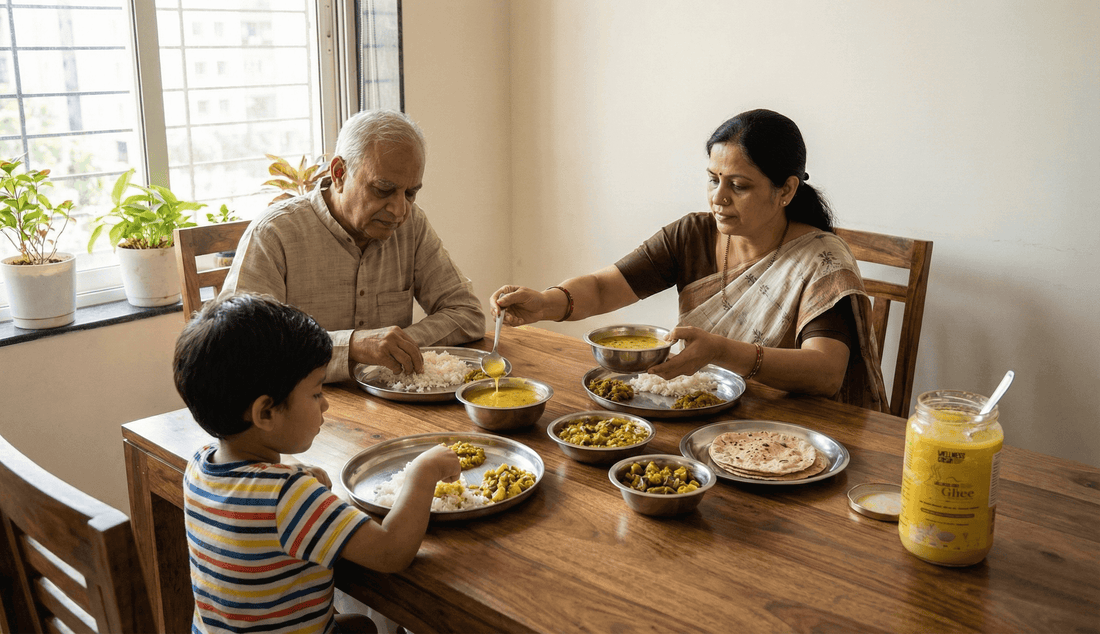
Ghee is a common ingredient in Indian kitchens, used across age groups—from children to elderly family members. However, as awareness around diet and lifestyle conditions increases, many people ask whether A2 ghee is suitable for diabetics, children, and senior citizens.
This article looks at A2 ghee from a dietary and usage perspective, focusing on preparation method, moderation, and traditional context—without making medical claims or treatment promises.
For a complete understanding of how A2 ghee is traditionally prepared, you may want to begin with our master guide:
👉 What Is A2 Bilona Ghee? Process, Benefits & Authenticity Explained
Understanding A2 Ghee in Everyday Diets
A2 ghee is made from milk that naturally contains A2 beta-casein protein, commonly found in indigenous Indian cow breeds such as Gir cows. When prepared using the bilona (curd-churning) method, the ghee follows a slow, traditional process that has been part of Indian diets for generations.
Importantly, ghee is a fat, not a carbohydrate or protein. This distinction is central to understanding how it fits into different diets.
Is A2 Ghee Safe for People with Diabetes?
People managing diabetes often monitor carbohydrate intake closely. Since ghee contains no carbohydrates or sugars, it does not directly raise blood glucose levels.
That said:
-
Ghee is calorie-dense
-
Portion control is essential
-
Overall dietary balance matters more than any single food
In traditional Indian diets, ghee is typically used in small quantities, added to cooked food rather than consumed in excess.
A2 ghee prepared using traditional methods—such as
👉 A2 Gir Cow Bilona Ghee
—is often preferred by households seeking minimally processed fats, but individuals with diabetes should always follow advice from qualified healthcare professionals.
Is A2 Ghee Suitable for Children?
Ghee has historically been included in children’s meals in Indian households, often added to rice, rotis, or vegetables.
From a dietary standpoint:
-
Ghee provides a source of dietary fat
-
Fat plays a role in energy intake and nutrient absorption
-
Moderation remains important
Parents today often look for ghee that is:
-
Prepared traditionally
-
Free from additives or preservatives
-
Transparent about sourcing and processing
Choosing ghee made using the bilona method aligns with how ghee has been traditionally introduced into children’s diets.
Is A2 Ghee Appropriate for Senior Citizens?
As people age, digestion and dietary tolerance can change. Many seniors prefer foods that are familiar, lightly processed, and easy to incorporate into routine meals.
In traditional Indian households:
-
Ghee is often used sparingly
-
Added to warm, cooked foods
-
Avoided in excess
A2 ghee prepared using traditional processes is commonly chosen by families for elderly members due to its alignment with long-standing dietary practices. However, individual tolerance varies, and portion size remains key.
The Importance of Moderation Across All Age Groups
Regardless of age or health status, moderation is essential.
Key considerations:
-
Ghee should complement, not dominate, the diet
-
A balanced intake of vegetables, grains, and proteins matters
-
Cooking methods and overall meal composition are equally important
Traditional diets emphasize balance and routine, not excessive consumption of any single ingredient.
Choosing the Right A2 Ghee
When selecting ghee for varied age groups, look for:
-
Clear mention of cow breed (e.g., Gir cow)
-
Disclosure of bilona or curd-churned method
-
Transparency around sourcing and processing
-
Food safety registration and testing
Educational clarity is often a better indicator of quality than marketing claims.
Conclusion
A2 ghee has been part of Indian diets across generations, used thoughtfully and in moderation. When prepared using traditional methods and consumed as part of a balanced diet, it fits naturally into meals for diabetics, children, and seniors alike.
Understanding preparation method, portion size, and overall dietary context is more important than relying on broad claims.


