
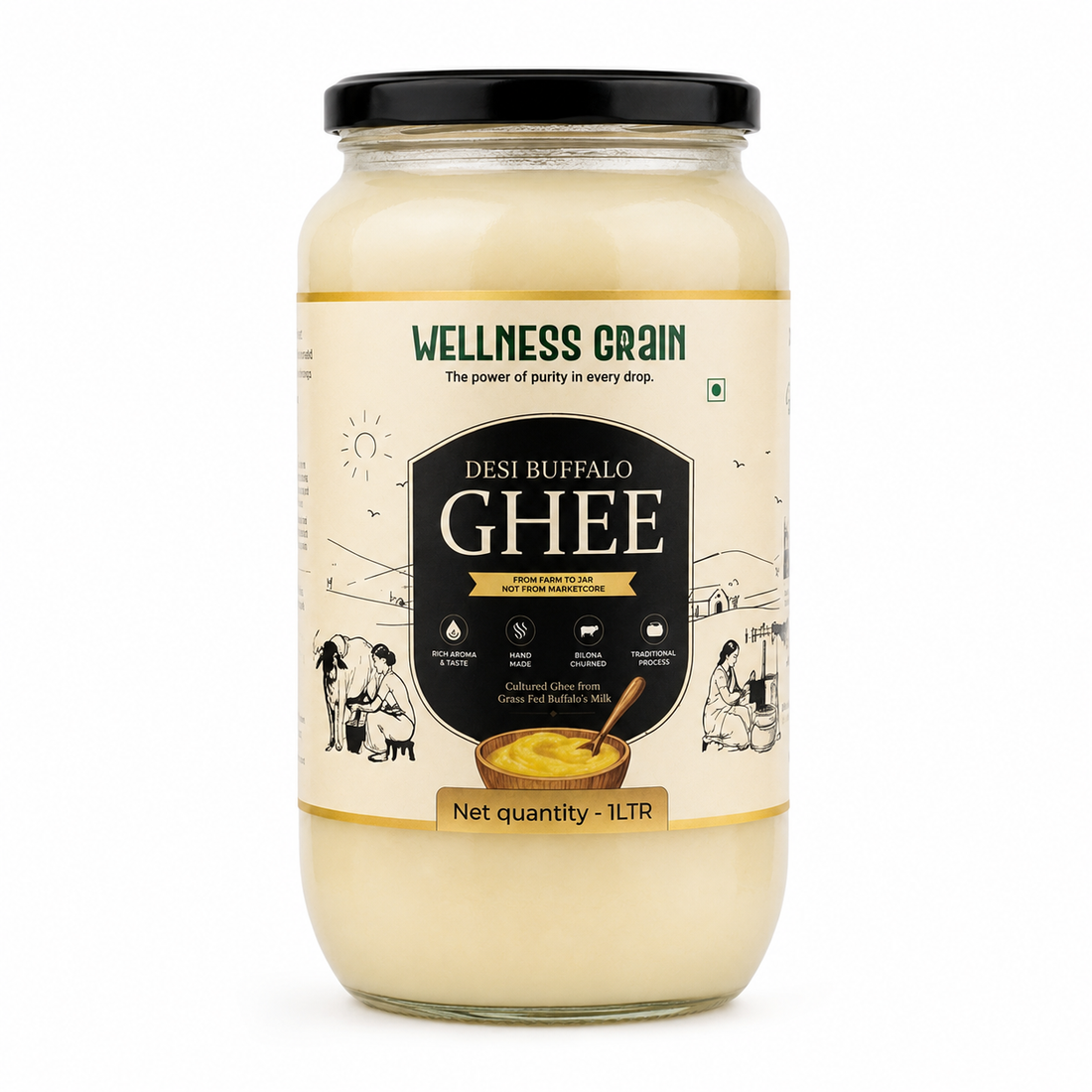
Quick answer: Halwa makers often prefer buffalo ghee because its richness carries sweetness and roasted flavour well, and its creamy, often granular texture is traditional in rich Indian sweets.
Halwa is mostly ghee
A classic sooji or atta halwa has very few ingredients: flour, sugar, water and a generous amount of ghee. With so few players, the ghee decides how the halwa smells, tastes and feels.
What rich ghee does in the pan
- Roasting: flour toasts evenly in plenty of ghee and turns fragrant and nutty
- Flavour: a creamy, full-bodied ghee rounds the sweetness
- Finish: the halwa turns glossy and releases ghee at the edges when done, the classic sign
About that granular texture
Many buffalo ghees set into a granular, grainy texture. This is a natural crystallisation, and many home cooks like it for sweets. Curious how it happens? Read why ghee turns grainy.
Five halwas to try
- Sooji halwa, the everyday favourite
- Atta halwa, popular at gurdwaras and festivals
- Moong dal halwa, the winter showstopper
- Gajar halwa, the season's classic
- Besan halwa, quick and fragrant
A small technique tip
Roast on medium heat and be patient. The aroma tells you when the flour is ready, long before the colour does.
Frequently asked
Can I use cow ghee for halwa?
Yes. Many people do, and the choice is personal. See The Two-Ghee Kitchen.
How much ghee does halwa need?
Traditional recipes are generous with ghee, and you can reduce it to taste.
For festival sweets more broadly, see The Diwali Mithai Secret.
Keep reading
Shop Wellness Grain A2 Desi Buffalo Ghee
This article is for general information and isn't a substitute for nutritional advice.


