
Introduction
If you have ever stored ghee at home, you may have noticed something interesting.
Sometimes ghee looks:
- Smooth and liquid
- Thick and semi-solid
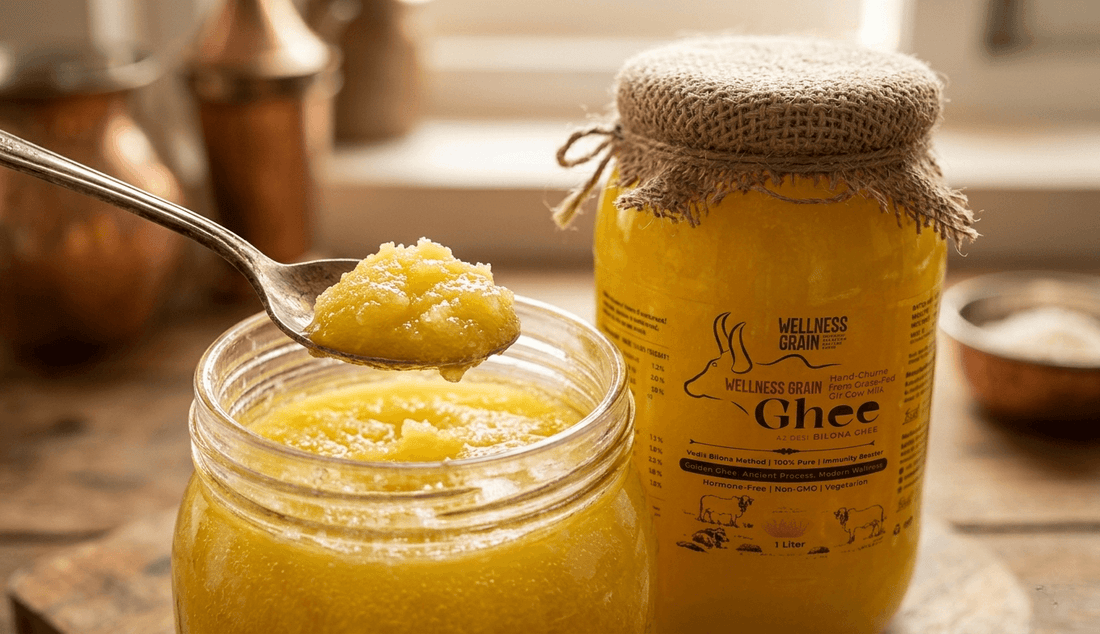
- Grainy or slightly textured
Many people worry when they see this and wonder:
“Is grainy ghee spoiled or fake?”
The answer is simple: grainy texture in ghee is completely natural and often a sign of traditional preparation.
Understanding why ghee changes texture can help you recognize authentic ghee and store it properly.
Why Ghee Changes Texture
Ghee is almost pure milk fat. Like most natural fats, its physical structure changes depending on temperature.
When the temperature drops, the fat molecules begin to crystallize, forming small grains or crystals.
This process creates the grainy or semi-solid appearance many people notice.
This is similar to how:
- Coconut oil solidifies in winter
- Butter becomes hard in the refrigerator
The change is physical — not a sign of spoilage.
What Causes Grainy Ghee?
Several natural factors influence the texture of ghee.
1. Temperature Changes
Temperature is the most common reason.
When ghee cools down:
- Fat crystals begin forming
- The structure becomes thicker
- Grainy texture may appear
When warmed again, the ghee usually becomes liquid.
2. Cooling Process After Preparation
The way ghee cools after being prepared also affects its texture.
Slow cooling often creates:
- Larger fat crystals
- More noticeable grainy structure
Fast cooling produces smoother texture.
Traditional ghee often cools naturally, which is why graininess may appear.
3. Fat Composition of Milk
The type of milk used to make ghee also influences texture.
Milk from indigenous cows contains different fat structures that can lead to natural crystal formation.
This is one reason traditionally prepared ghee may show slight graininess.
4. Storage Conditions
Storage environment can also affect ghee texture.
Factors include:
- Room temperature fluctuations
- Refrigeration
- Container material
Even pure ghee can change texture when storage conditions vary.
Is Grainy Ghee a Sign of Good Quality?
Graininess alone does not prove quality, but it is often seen in traditionally made ghee.
Authentic ghee typically shows:
- Natural aroma
- Golden color
- Smooth mouthfeel
- Occasional grainy texture
Highly processed ghee may appear extremely uniform because of industrial processing methods.
👉 Related reading: Bilona Ghee vs Cream-Based Ghee: Why the Method Matters
Why Some Ghee Always Looks Smooth
Industrial ghee production often uses methods that control crystallization.
Large-scale manufacturers may:
- Process fat at high temperatures
- Rapidly cool ghee
- Standardize texture for consistency
This creates a uniform appearance but does not necessarily indicate better quality.
Does Grainy Ghee Affect Taste?
No.
Grainy structure does not change the taste or aroma of ghee.
Once heated during cooking, the texture disappears completely.
This is why grainy ghee behaves exactly the same in:
- tadka
- roasting
- frying
- spreading on roti
How to Restore Smooth Texture
If you prefer smooth ghee, you can easily fix the texture.
Simply:
- Warm the ghee slightly
- Allow it to melt completely
- Let it cool again slowly
This resets the crystal structure.
When Should You Be Concerned?
Texture changes are normal, but certain signs may indicate spoilage.
Watch for:
- Sour smell
- Bitter taste
- Visible mold (rare but possible with moisture contamination)
If these appear, it is best not to consume the product.
Traditional Indian Perspective
In many Indian households, grainy ghee has always been considered normal.
Older generations often associated this texture with:
- homemade ghee
- natural preparation
- slow cooling methods
This is why texture variations are common in traditional ghee.
Final Thoughts
Ghee is a natural product, and natural foods often show small variations.
Grainy or solid ghee usually happens because of temperature changes and fat crystallization.
Rather than being a problem, it often reflects the natural structure of milk fat.
Understanding these changes helps consumers store ghee confidently and recognize authentic characteristics of traditional ghee.
Shop at : A2 Gir Cow Bilona Ghee | Pure Desi Ghee for Digestion & Immunity – Wellness Grain


