
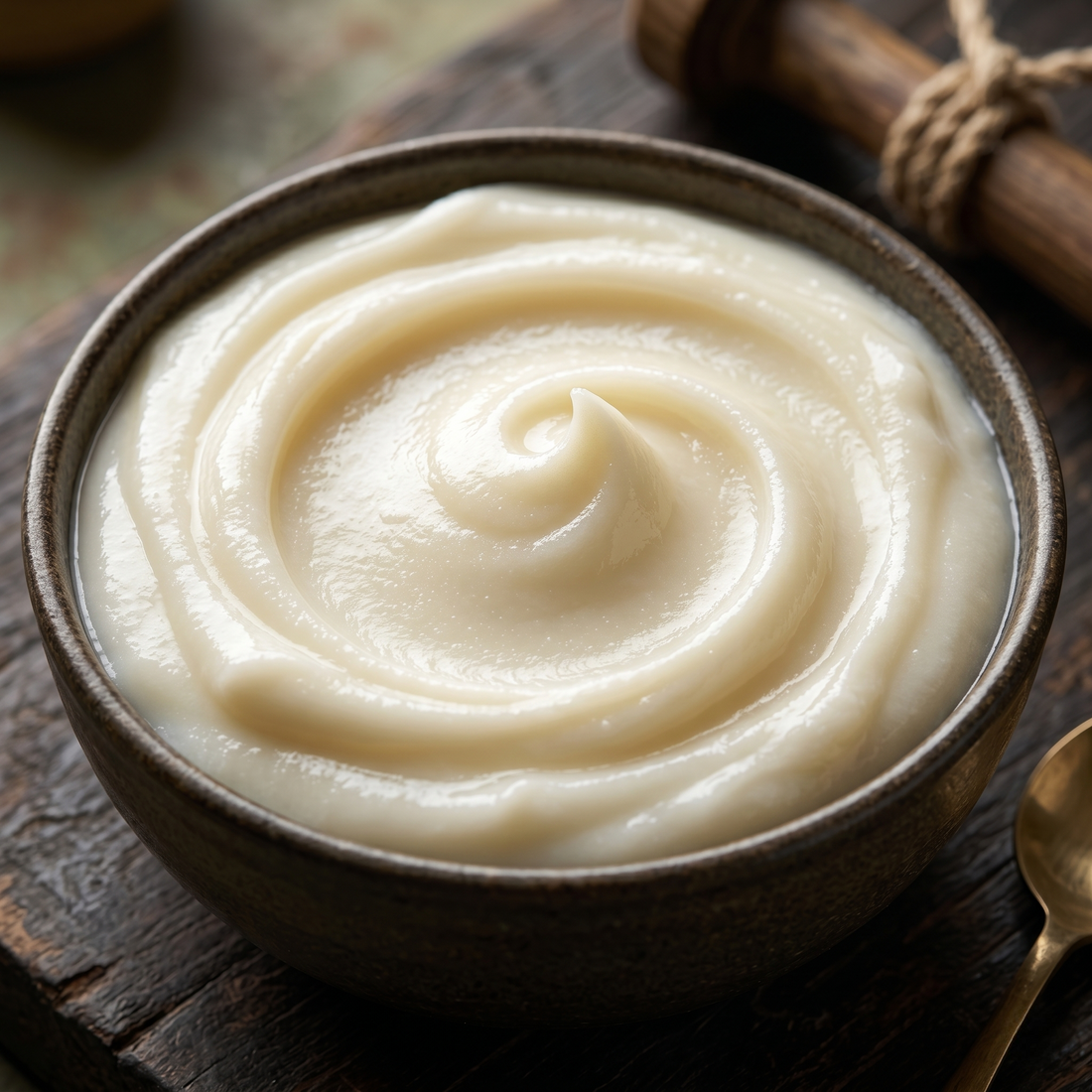
Quick answer: Buffalo milk typically carries roughly twice the fat of cow milk, so the same effort yields more ghee and a richer, creamier result. That is why buffalo ghee has a reputation for body and mouthfeel.
The fat percentage gap
Cow milk usually sits around 3.5 to 5 percent fat. Buffalo milk is commonly in the range of 6 to 8 percent. Exact numbers vary by breed, feed and season, but the gap is consistent, and it is one of the main reasons buffalo milk has long been prized for dairy products like ghee, paneer and khoya.
What more fat means in the kitchen
- Richness: a fuller, rounder taste on the tongue
- Body: a thicker, creamier texture when set
- Staying power: rich dishes like halwa hold their flavour well
Where culturing comes in
Wellness Grain A2 Desi Buffalo Ghee is made by culturing A2 desi buffalo milk into curd, then churning the curd to separate butter, which is cooked into ghee. Starting with a fat-rich milk and a curd-based process is how this ghee gets its creamy character.
A fair note on richness
Richer does not automatically mean better for every kitchen. Lighter meals, daily salads and everyday dal may suit a lighter ghee, which is why many homes keep both. Read The Two-Ghee Kitchen for how.
Frequently asked
Is buffalo ghee heavier to digest?
Responses vary by person. Moderate amounts as part of a balanced diet suit most people, and our daily quantity guide covers sensible portions. Check with your doctor if you manage a health condition.
Does buffalo ghee taste different?
Many people describe it as creamier and milder in colour and aroma than cow ghee, though taste is personal.
Keep reading
Shop Wellness Grain A2 Desi Buffalo Ghee
This article is for general information and isn't a substitute for medical or nutritional advice.


