
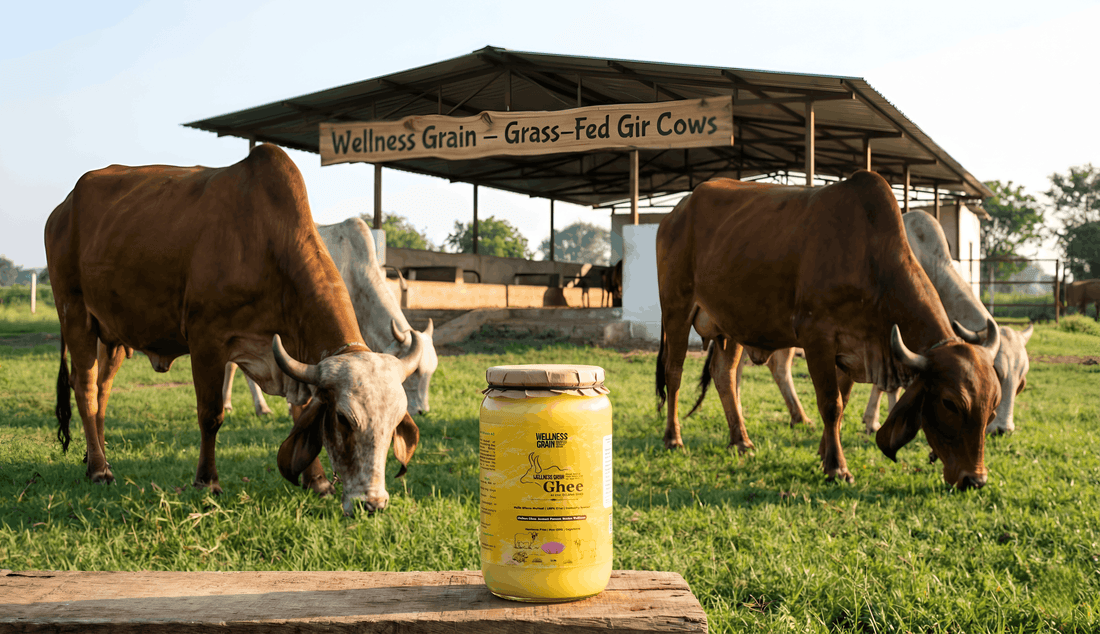
Ghee has been a cornerstone of Indian cooking for centuries, but as demand grows, not all ghee available today is made the same way. One of the most important yet often overlooked differences lies in what the cow eats.
The debate between grass-fed vs grain-fed ghee goes far beyond taste or color. A cow’s diet directly influences the fatty acid profile, digestibility, aroma, and overall quality of the ghee you consume daily.
In this guide, we break down the real differences between grass-fed and grain-fed ghee—so you can make an informed choice for your family’s long-term health.
What Is Grass-Fed Ghee?
Grass-fed ghee is made from the milk of cows that graze naturally on pasture grasses, herbs, and native fodder. In India, this typically includes indigenous cow breeds such as Gir, Sahiwal, and Tharparkar.
Traditional A2 ghee producers, including brands like Wellness Grain, source milk from free-grazing Gir cows, raised without artificial growth hormones or routine antibiotics.
Because grass is a cow’s natural diet, the milk produced is richer in beneficial fats—resulting in ghee with better nutritional balance and aroma.
👉 To understand how this milk is transformed into authentic ghee, read our detailed guide on
what A2 bilona ghee is and how it is made.
What Is Grain-Fed Ghee?
Grain-fed ghee comes from cows that are primarily fed commercial grains such as corn, soy, and processed feed mixes. These cows are often kept in confined dairy environments to maximize milk yield.
While this system increases production efficiency, it can affect:
-
Milk composition
-
Fat quality
-
Overall ghee flavor and digestibility
Grain-based diets tend to increase Omega-6 fatty acids, which may disrupt the natural fat balance when consumed regularly in excess.
Grass-Fed vs Grain-Fed Ghee: Key Differences Explained
| Feature | Grass-Fed A2 Ghee | Grain-Fed Ghee |
|---|---|---|
| Cow breed | Indigenous (Gir, Sahiwal) | Crossbred / Jersey |
| Cow diet | Natural grass & fodder | Commercial grain feed |
| Fatty acid profile | Higher CLA & Omega-3 | Higher Omega-6 |
| Taste & aroma | Rich, nutty, earthy | Mild or neutral |
| Preparation method | Bilona, curd-churned | Cream separator |
| Digestibility | Generally easier to digest | May feel heavy |
| Environmental impact | Natural grazing | Resource-intensive |
These differences become especially important when ghee is used daily, not occasionally.
Why Grass-Fed A2 Ghee Is Often Preferred for Families
👶 Better for Children
Grass-fed A2 ghee contains naturally occurring fats that support energy needs and nutrient absorption, making it a traditional addition to children’s meals in moderation.
🧑 Ideal for Adults
For adults, grass-fed ghee is valued for its stable cooking properties, support for digestion, and compatibility with traditional Indian diets.
👴 Supportive for Seniors
Elderly individuals often prefer ghee that is lighter on digestion and aligned with Ayurvedic practices—one reason grass-fed A2 ghee is commonly recommended in traditional households.
👉 Many families choose
A2 Gir Cow Bilona Ghee
for daily cooking because it combines grass-fed sourcing with the traditional bilona process.
How Grass-Fed Ghee Fits Into Traditional Indian Cooking
Grass-fed ghee has a high smoke point, making it suitable for:
-
Tadka and sautéing
-
Cooking dals and vegetables
-
Adding to rotis, rice, and khichdi
Because it is slow-cooked and free from industrial processing, it retains its natural aroma and stability, even when heated.


