
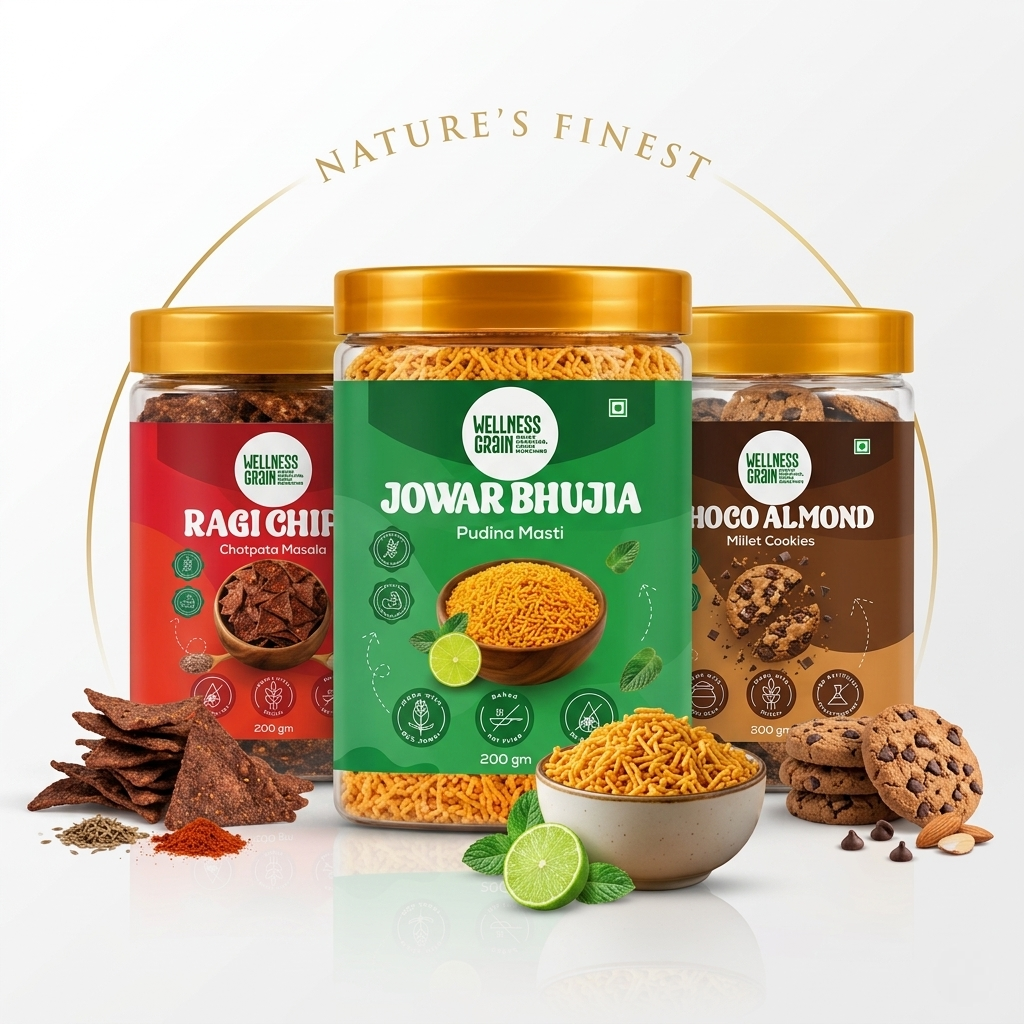
Millets used to be the grain your grandparents ate before rice and wheat took over Indian kitchens. Now they're back, this time reinvented as bhujia, chips, and cookies you can grab straight off a shelf. Here's what's actually driving the shift, and how to make sense of it.
Why millets, and why now
Jowar (sorghum), ragi (finger millet), and bajra (pearl millet) are naturally gluten-free grains that were staples across India long before refined wheat flour, or maida, became the default for snacks. As more people look for alternatives to maida-heavy, deep-fried snacking, millet-based options have moved from health-food shelves into everyday snacking.
What makes a millet snack different from a regular one
- Made from whole millet flour instead of refined maida
- Often baked rather than deep-fried
- Typically lower in the ultra-processed additives found in mass-market packaged snacks
- Naturally gluten-free, since millets don't contain gluten
Wellness Grain's millet snack range
Our range currently includes three everyday snacks built around this idea: a masala-spiced jowar bhujia, a baked ragi chip, and a millet-and-jaggery cookie. Each swaps out maida and deep-frying for whole millet flour and baking.
Explore the range
- Jowar Bhujia Pudina Masti: a healthier take on a classic snack
- Ragi Chips benefits: why finger millet makes a smart snack
- Choco Almond Millet Cookies: can a cookie be better-for-you?
- Baked vs fried snacks: why it matters
- Zero maida snacks explained
- Jowar vs ragi vs bajra: a simple guide
- Healthy tiffin and lunchbox ideas
- Millet snacks for mindful snacking
- No palm oil snacks: why the ingredient list matters
This article is for general information. Always check the ingredient and nutrition label on the pack for exact details.


