
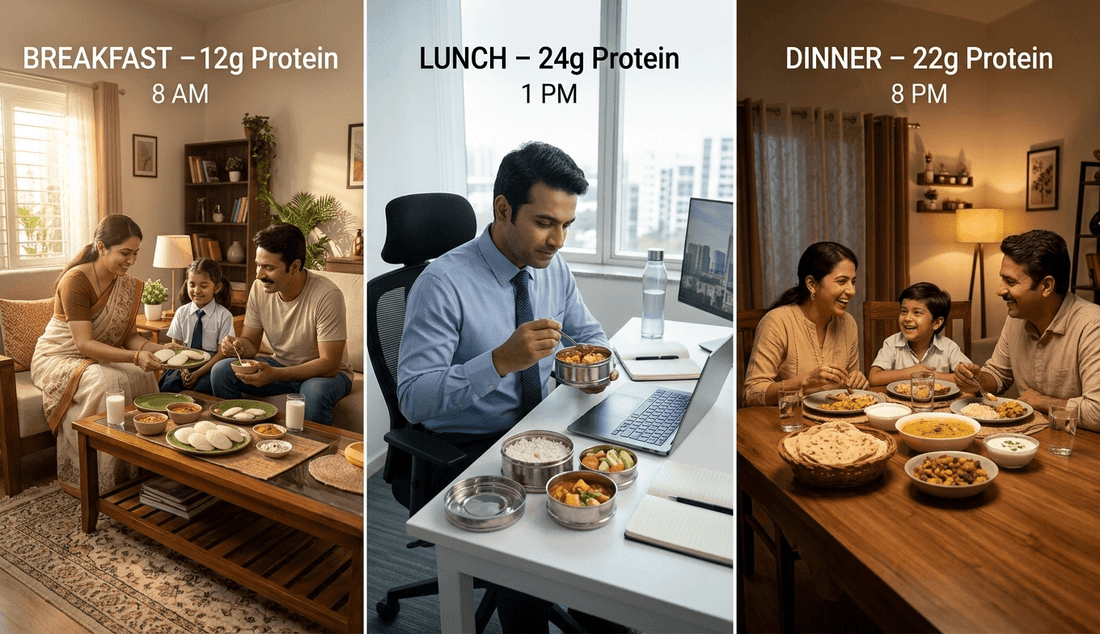
Most Indians believe they are getting enough protein through daily meals like roti, dal, and sabzi. But when you actually calculate the numbers, the reality is very different.
Protein intake in India is often far below what the body actually needs—leading to fatigue, weight gain, and long-term health issues.
Let’s simplify exactly how much protein you need per day, based on your age, lifestyle, and goals.
Why Daily Protein Intake Matters
Protein is not just for muscle building. It plays a critical role in:
- Energy levels throughout the day
- Muscle maintenance and strength
- Hormonal balance
- Immunity
- Skin, hair, and nail health
Unlike carbs and fats, your body does not store protein efficiently. This means you need to consume it daily in the right amount.
Daily Protein Requirement (Simple Formula)
The easiest way to calculate your protein intake is:
👉 0.8 to 1 gram of protein per kg of body weight
For active individuals:
👉 1.2 to 1.5 grams per kg
Examples (Easy to Understand)
- 50 kg person → 40–50g protein/day
- 60 kg person → 48–60g protein/day
- 70 kg person → 56–70g protein/day
Most Indians consume only 30–40g per day, which creates a consistent protein gap.
Protein Requirements by Age Group (India Focus)
1. Children (5–12 years)
- Needs: 0.9–1g per kg
- Why: Growth, brain development, immunity
2. Teenagers (13–18 years)
- Needs: 1–1.2g per kg
- Why: Rapid growth, hormonal changes
3. Adults (19–50 years)
- Needs: 0.8–1g per kg
- Why: Maintenance, energy, metabolism
4. Active Adults / Gym-goers
- Needs: 1.2–1.5g per kg
- Why: Muscle recovery, fat loss
5. Women (Special Focus)
-
Slightly higher need during:
- Pregnancy
- PCOS
- Weight loss
6. Seniors (50+ years)
- Needs: 1–1.2g per kg
- Why: Prevent muscle loss, maintain strength
Why Indians Are Not Meeting Protein Needs
Even with regular meals, protein intake stays low because:
- Meals are carb-heavy (roti, rice dominant)
- Dal quantity is too small
- Lack of protein awareness
- Vegetarian diets without proper combinations
- No focus on protein in breakfast
This creates a daily protein deficit.
How Much Protein Is in a Typical Indian Meal?
Let’s look at a common diet:
- 2 rotis → ~6g protein
- 1 katori dal → ~6–8g protein
- Sabzi → ~2g protein
👉 Total per meal: ~12–15g
Even with 3 meals, you reach only ~35–40g per day—still below optimal levels.
How to Easily Increase Daily Protein Intake
You don’t need a drastic diet change. Just small upgrades:
1. Improve Your Staples
Switch to higher-protein daily foods like improved atta options that naturally increase intake.
2. Add Protein to Breakfast
Most Indians skip protein in breakfast. Add:
- Besan chilla
- Sprouts
- Plant protein options
3. Increase Portion of Dal & Legumes
Slightly increasing portions can make a big difference.
4. Combine Foods Smartly
- Roti + dal
- Rice + beans
This improves protein absorption.
5. Distribute Protein Across Meals
Instead of one heavy meal, spread protein intake throughout the day.
A Practical Daily Protein Plan (Indian Example)
Breakfast:
Besan chilla + sprouts → ~15g
Lunch:
2–3 rotis + dal + sabzi → ~18g
Snack:
Roasted chana / plant protein → ~10–15g
Dinner:
Roti + paneer/legumes → ~20g
👉 Total: ~60g protein (balanced intake)
Common Mistakes to Avoid
- Assuming dal alone is enough
- Skipping protein in breakfast
- Focusing only on carbs
- Eating protein only once a day
- Ignoring protein during weight loss
Final Thoughts
Protein is not optional—it’s essential for daily functioning.
The biggest problem in India is not lack of food, but lack of the right nutrients in the right quantity.
Once you understand your daily requirement, improving protein intake becomes simple—and highly impactful.
Check your Daily Nutrition Requirement - Nutrition Calculator Online | Track Daily Nutrition – Wellness Grain


