
Introduction
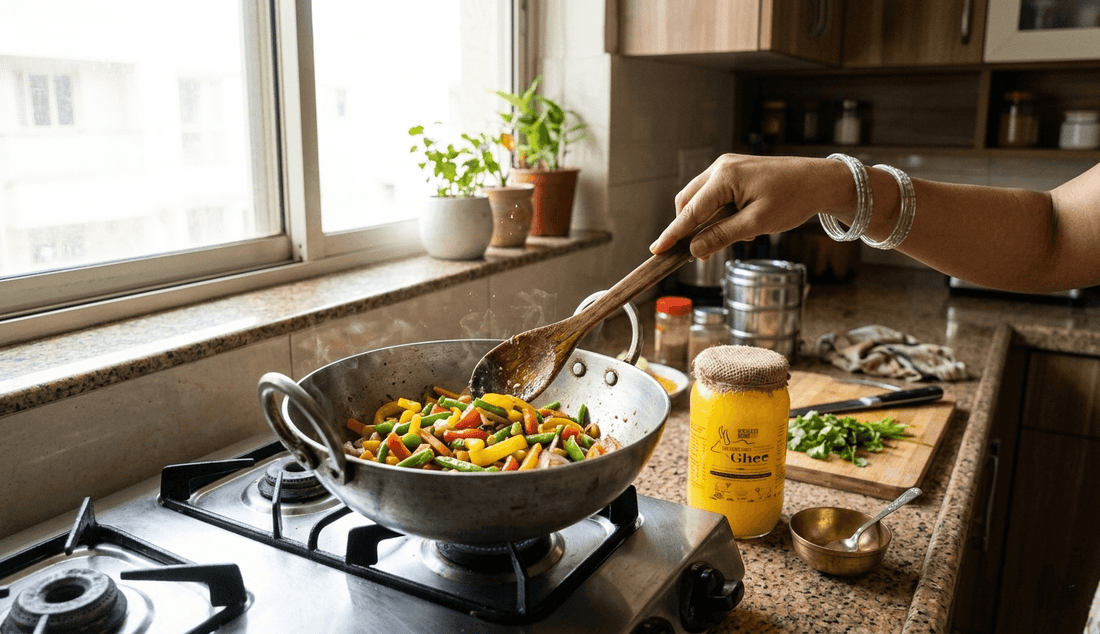
Ghee has been a staple in Indian kitchens for centuries. From traditional village homes to modern urban kitchens, this golden fat has always played an important role in cooking.
Yet today many people ask:
- How should ghee actually be used in daily cooking?
- Which dishes benefit the most from ghee?
- How much ghee is enough?
Understanding how to use ghee properly can help improve both taste and meal satisfaction without overusing it.
This guide explains simple and practical ways to include ghee in everyday Indian cooking.
Why Ghee Works Well in Indian Cooking
One reason ghee has remained popular in Indian cuisine is its cooking stability.
Ghee has a high smoke point, which means it can handle cooking temperatures commonly used in Indian kitchens.
It works well for:
- Tadka (tempering spices)
- Roasting spices
- Cooking vegetables
- Finishing dishes
Because of its natural aroma, even a small quantity can enhance the flavor of a meal.
The Best Ways to Use Ghee in Daily Meals
1. Adding Ghee to Dal
One of the most common uses of ghee in Indian cooking is finishing dal with a small spoon of ghee.
When ghee is added to hot dal:
- It releases aroma
- Enhances flavor
- Improves overall meal satisfaction
This simple addition is common across many Indian households.
2. Applying Ghee on Roti
Another traditional practice is spreading a small amount of ghee on freshly cooked roti.
Benefits include:
- Better taste
- Improved texture
- Increased satiety
Even a small quantity can make the meal more satisfying.
3. Using Ghee for Tadka (Tempering)
Ghee works extremely well for tempering spices.
Common tadka ingredients include:
- Cumin seeds
- Garlic
- Mustard seeds
- Curry leaves
Heating spices in ghee helps release their natural flavors more effectively.
4. Cooking Vegetables with Ghee
Vegetables sautéed in ghee often develop a richer taste compared to neutral oils.
Popular examples include:
- Aloo jeera
- Bhindi fry
- Cabbage sabzi
Using a small quantity of ghee while cooking vegetables adds depth to the dish.
5. Finishing Rice or Khichdi with Ghee
Adding ghee to rice or khichdi is a classic Indian practice.
Just one teaspoon can:
- Improve aroma
- Enhance taste
- Make the meal more comforting
How Much Ghee Should Be Used in Cooking?
While ghee enhances flavor, moderation remains important.
For most households:
👉 1–2 teaspoons per dish is usually enough.
Using excessive quantities may increase calorie intake unnecessarily.
The goal is flavor enhancement, not excess fat consumption.
Why Many Families Are Returning to Ghee
Over the past few years, many Indian households have started replacing refined oils with traditional fats like ghee.
Reasons include:
- Desire for less processed ingredients
- Preference for traditional cooking methods
- Better flavor in home-cooked meals
This shift reflects a growing awareness of food quality and cooking practices.
Practical Tips for Cooking with Ghee
To use ghee effectively in cooking, keep these tips in mind:
• Use moderate quantities
• Avoid overheating unnecessarily
• Store ghee properly to maintain aroma
• Use clean dry spoons when serving
These simple habits help preserve the quality of ghee.
When Not to Use Ghee
Although ghee is versatile, there are situations where other fats may be used instead.
For example:
- Very large-scale frying
- Certain cuisines that require neutral oils
Choosing the right fat depends on the dish being prepared.
Final Thoughts
Ghee has remained a central ingredient in Indian cooking because of its versatility, flavor, and stability.
Using ghee in daily meals does not require large quantities. Even a small spoon added thoughtfully can significantly enhance the taste of food.
Understanding how to use ghee properly helps maintain balance while enjoying the richness of traditional Indian cuisine.


