
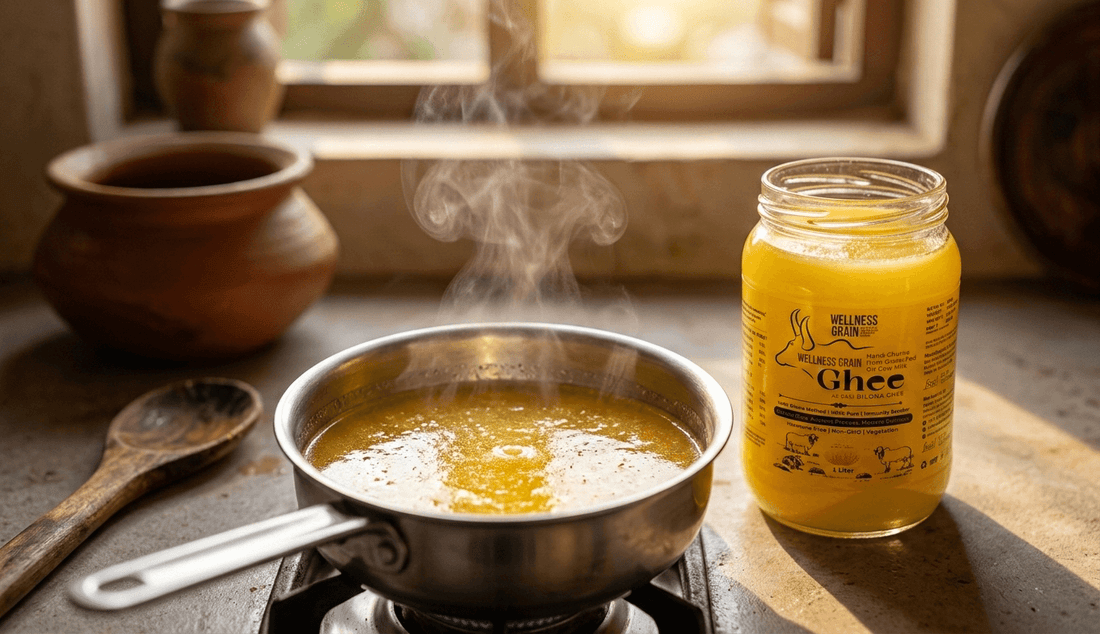
If you have ever opened a jar of authentic A2 bilona ghee and thought:
“This smells different.”
You are not imagining it.
The aroma of traditionally made A2 ghee is deeper, nuttier, and more layered than most commercial ghee available in the market. The taste is richer. The texture feels smoother.
This difference is not marketing. It comes from:
-
The milk source
-
The fermentation process
-
The heating method
-
The cooking temperature
-
The cow’s diet
Understanding why authentic A2 bilona ghee smells and tastes different can help you identify purity, avoid adulteration, and make better choices for your family.
What Does Pure A2 Bilona Ghee Smell Like?
Authentic A2 bilona ghee typically has:
-
A warm, nutty aroma
-
Slight caramelised notes
-
A mild earthy undertone
-
A lingering fragrance even after cooking
When heated in a pan, pure ghee releases a strong but pleasant smell that spreads quickly through the kitchen.
If ghee smells:
-
Artificially sweet
-
Completely neutral
-
Sharp or chemically
-
Too bland
It may indicate high-temperature processing, blending, or poor-quality milk source.
Why Bilona Ghee Has a Stronger Aroma Than Regular Ghee
The key difference lies in fermentation.
Step 1: Milk Becomes Curd
In the bilona method:
Milk → Curd → Butter → Ghee
When milk ferments into curd, natural lactic acid bacteria:
-
Break down lactose
-
Alter protein structures
-
Develop aromatic compounds
These compounds later transform during slow heating into the rich nutty smell people associate with “real ghee.”
In contrast, cream-based commercial ghee skips fermentation entirely.
👉 link suggestion: Bilona Ghee vs Cream-Based Ghee: Why the Method Matters
Slow Cooking Preserves Aroma Compounds
Traditional bilona ghee is heated slowly over low flame.
Why does this matter?
High temperatures can destroy volatile aroma compounds. Slow heating allows:
-
Milk solids to caramelise gently
-
Nutty notes to develop naturally
-
Fat structure to remain stable
This controlled cooking creates depth of flavour instead of just burnt milk fat.
Industrial ghee, produced rapidly, often lacks this layered aroma.
The Role of A2 Milk in Taste and Texture
Authentic A2 bilona ghee is made from milk of indigenous Indian cows such as Gir.
A2 milk differs structurally from A1 milk in its beta-casein protein composition. While ghee contains negligible protein, the original milk composition still influences:
-
Butter texture
-
Fermentation behaviour
-
Final flavour balance
Additionally, indigenous cows raised on natural pasture contribute to better fatty acid profiles, influencing mouthfeel and aroma intensity.
👉 Internal link suggestion: Why Gir Cows Are Trusted for Ghee in Indian Tradition
Why Market Ghee Often Smells Neutral
If you compare most supermarket ghee to traditional bilona ghee, you may notice:
-
Weaker smell
-
Less depth
-
Mild taste
This happens because:
-
Cream is separated directly (no fermentation)
-
Heating is done at industrial scale
-
Large batches prioritise uniformity over complexity
Neutral smell is not necessarily “fake,” but it usually indicates faster processing.
Can Smell Help You Identify Pure Ghee?
Smell is not a lab test — but it is a strong indicator.
Here’s how to test at home:
The Warm Spoon Test
-
Take one spoon of ghee.
-
Heat it gently.
-
Smell immediately.
Pure bilona ghee will:
-
Release strong nutty aroma
-
Smell clean, not oily
-
Leave pleasant after-fragrance
Adulterated ghee may:
-
Smell like vegetable oil
-
Feel greasy without aroma
-
Leave no lingering scent
However, lab testing remains the most reliable method.
👉 Internal link suggestion: Ghee Adulteration in India: What Happened in Gujarat & How to Protect Yourself
Why Taste Is Also Different
Authentic A2 bilona ghee usually tastes:
-
Smooth and rounded
-
Slightly sweet at the end
-
Not overly greasy
-
Light on the tongue
Cream-based or blended ghee may feel:
-
Flat
-
Heavy
-
Oily
-
Short-lived in flavour
Texture matters because it influences digestion and satisfaction after meals.
The Science Behind Ghee Aroma
Ghee aroma develops due to:
-
Lactones
-
Free fatty acids
-
Caramelised milk solids
-
Short-chain fatty acids like butyric acid
Slow heating enhances these compounds.
Excessive heat destroys them.
This is why traditional ghee often smells stronger than factory-made versions.
Does Strong Smell Mean Better Quality?
Not always.
Extremely burnt smell may indicate overheating.
Artificial fragrance indicates tampering.
Authentic ghee smell should be:
-
Deep but not burnt
-
Rich but not sharp
-
Clean, not chemical
Balance is the key indicator of quality.
Why Many People Say “I Can Smell the Difference”
Consumers switching from commercial ghee to authentic bilona ghee often report:
-
Stronger aroma
-
Better tadka flavour
-
Improved satisfaction in small quantity
-
Less heaviness
Because the aroma compounds stimulate sensory perception, people feel they need less ghee to get flavour impact.
This may indirectly support portion control.
Final Thoughts
The smell and taste of authentic A2 bilona ghee are not random.
They reflect:
-
Fermentation
-
Slow cooking
-
Milk quality
-
Traditional process
-
Smaller batch production
When you open a jar and the aroma fills the kitchen, that is not exaggeration. That is chemistry and tradition working together.
Understanding this difference helps you choose consciously — not just based on label claims.
👉 Explore: Wellness Grain A2 Gir Cow Bilona Ghee
