
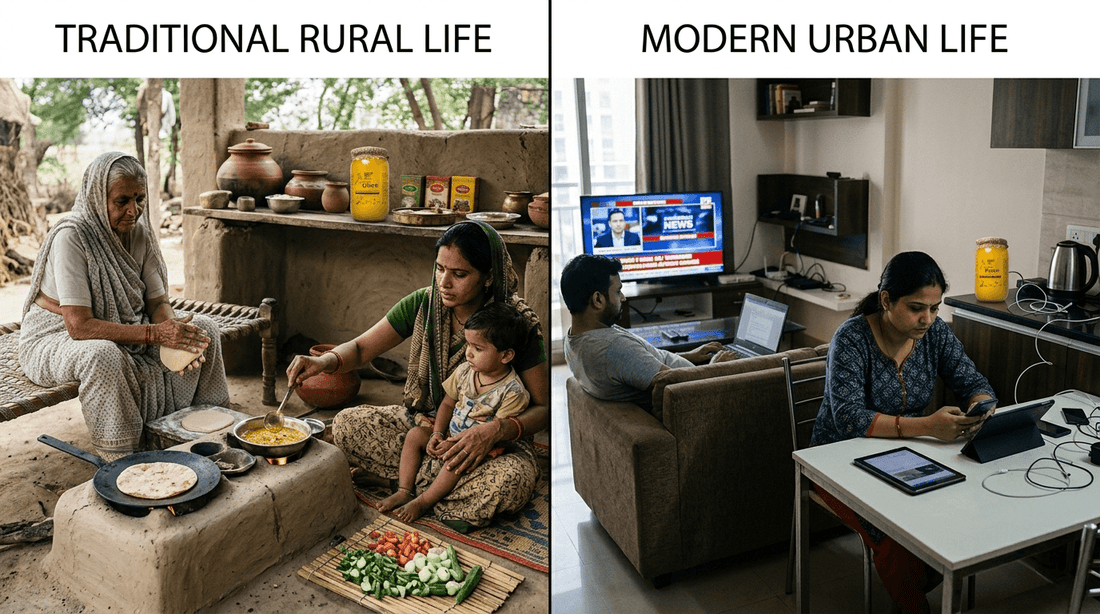
The Traditional Indian Diet: What It Actually Looked Like
Before modern food systems, Indian diets were:
- Home-cooked
- Seasonal
- Balanced
- Minimally processed
Ghee was used daily — but in small, controlled amounts.
Meals typically included:
- Whole grains (roti, rice)
- Lentils (dal)
- Vegetables
- Fermented foods
- A small quantity of ghee
👉 Ghee was part of the system — not the entire diet.
What Changed Over Time?
Over the past few decades, major shifts occurred in how we eat.
1. Rise of Processed Foods
Modern diets now include:
- Packaged snacks
- Refined flour (maida)
- Added sugars
- Ultra-processed meals
These foods are calorie-dense but nutrient-poor.
2. Increase in Refined Oils
Traditional fats like ghee were replaced with:
- Sunflower oil
- Soybean oil
- Palm oil
These oils became popular due to:
- Industrial scalability
- Marketing as “heart healthy”
- Lower cost
👉 Related reading: Ghee vs Refined Oil: Which Is Better for Cooking?
3. Reduced Physical Activity
Earlier lifestyles involved:
- Walking
- Farming
- Manual work
Today:
- Sedentary jobs
- Screen-based lifestyles
- Low daily movement
4. Higher Sugar Consumption
Sugar intake has increased significantly through:
- Packaged foods
- Beverages
- Desserts
This plays a major role in metabolic health issues.
Why Ghee Got Blamed
During the global “low-fat” movement:
- Saturated fats were labeled harmful
- Ghee was categorized as unhealthy
- Refined oils replaced traditional fats
However, this shift was based on incomplete understanding.
What Modern Understanding Tells Us
Today, nutrition science recognizes that:
👉 Not all fats are equal
👉 Processing matters
👉 Context matters
Ghee is:
- Minimally processed
- Heat stable
- Traditionally consumed in moderation
This makes it very different from highly refined fats.
The Real Problem: Lifestyle Imbalance
The increase in lifestyle diseases is more strongly linked to:
- Excess calorie intake
- Low physical activity
- Processed food consumption
- Sugar overload
👉 Not just a single ingredient like ghee
Why Ghee Still Fits in a Balanced Diet
When used correctly, ghee:
- Enhances taste
- Improves satiety
- Supports traditional cooking methods
👉 Related reading: Can You Eat Ghee Every Day?
The Role of Moderation
Traditional diets never promoted excess ghee consumption.
Instead:
👉 Small amounts, regularly used
This is the key difference between past and present.
What Modern Indian Families Can Learn
Instead of eliminating ghee completely, a better approach is:
✔ Reduce processed foods
✔ Control overall calories
✔ Stay physically active
✔ Use ghee in moderation
A Simple Way to Think About It
Earlier:
👉 Simple food + active lifestyle + moderate ghee
Today:
👉 Processed food + low activity + excess calories
The difference is clear.
Final Thoughts
Ghee was never the root cause of modern health problems.
It became a scapegoat during a time when larger lifestyle changes were happening.
👉 The real issue is not ghee — it is imbalance.
Understanding this helps us make better decisions:
- Not extreme elimination
- Not blind consumption
👉 But balanced, mindful eating


