
Introduction
One of the most common concerns people have about ghee is:
👉 “Does ghee increase cholesterol?”
For years, ghee has been viewed with caution, especially by people trying to manage heart health. Many households reduced or completely removed ghee from their diets due to fear of cholesterol.
But at the same time, traditional Indian diets have included ghee for generations — often without the widespread lifestyle issues we see today.
So what’s the truth?
Is ghee harmful for cholesterol, or has it been misunderstood?
This article explains the topic in a clear, balanced, and practical way, combining modern understanding with traditional usage.
Understanding Cholesterol: A Simple Explanation
Before discussing ghee, it’s important to understand cholesterol itself.
Cholesterol is a type of fat in the body that is essential for:
- Hormone production
- Cell structure
- Vitamin absorption
There are two commonly discussed types:
- LDL (Low-Density Lipoprotein) – often referred to as “bad cholesterol”
- HDL (High-Density Lipoprotein) – often referred to as “good cholesterol”
The goal is not to eliminate cholesterol, but to maintain a healthy balance.
Does Ghee Contain Cholesterol?
Yes, ghee does contain cholesterol because it is derived from animal milk fat.
However, the presence of cholesterol in food does not automatically mean it will negatively impact your health.
What matters more is:
- Overall diet
- Lifestyle
- Quantity consumed
Does Eating Ghee Increase Cholesterol Levels?
The answer is not as simple as yes or no.
Moderate Consumption
When consumed in moderate amounts, ghee:
- May not significantly increase cholesterol levels in healthy individuals
- Can be part of a balanced diet
Excess Consumption
Overconsumption of any fat, including ghee, may:
- Increase overall calorie intake
- Affect lipid balance
- Contribute to health issues
Why Ghee Was Considered Harmful
Ghee gained a negative reputation during the “low-fat diet” era when:
- Saturated fats were widely discouraged
- Refined oils were promoted as healthier alternatives
- Traditional fats were misunderstood
However, modern research suggests that dietary fat quality and overall lifestyle matter more than simply avoiding fats.
How Ghee Fits Into a Balanced Diet
Ghee can be included in daily meals when:
- Used in small quantities
- Combined with fiber-rich foods
- Part of a balanced diet
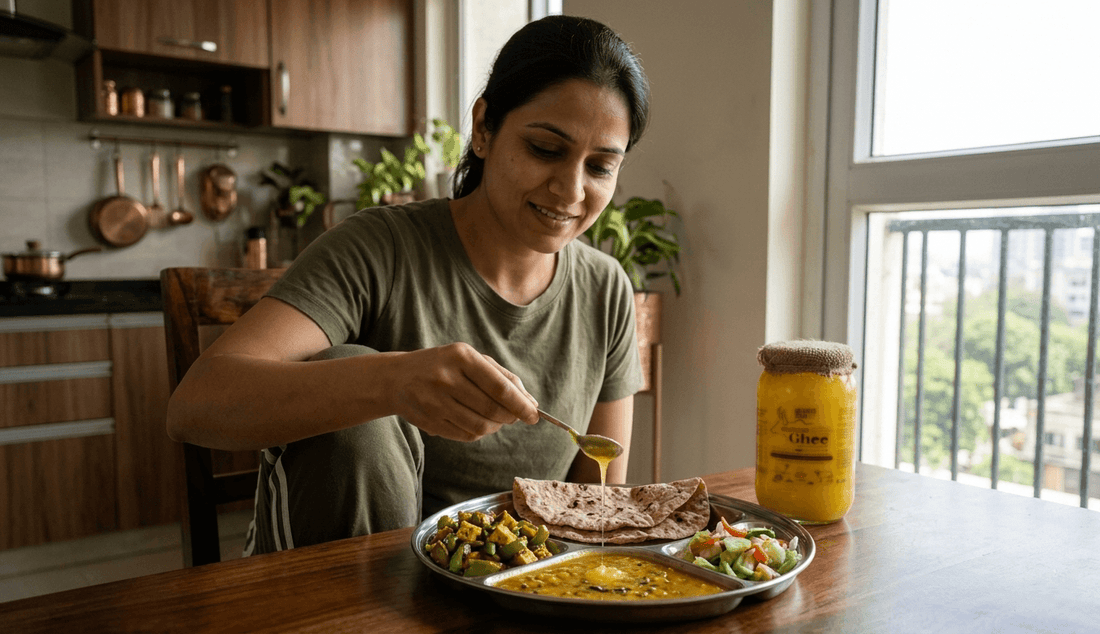
Traditional Indian meals often included:
- Dal + ghee
- Roti + ghee
- Rice + ghee
This combination helped balance digestion and satiety.
Ghee vs Refined Oils for Heart Health
Ghee:
- Less processed
- Stable at high temperatures
- Used traditionally in controlled amounts
Refined Oils:
- Highly processed
- May degrade when overheated
- Often overused in modern diets
👉 Related reading: Ghee vs Refined Oil: Which Is Better for Daily Cooking?
The Role of Quantity and Lifestyle
The real impact on cholesterol depends on:
- Total fat intake
- Physical activity
- Diet quality
- Sugar and processed food consumption
Ghee alone is rarely the sole cause of cholesterol imbalance.
What Modern Diet Patterns Show
In many cases, rising health concerns are linked more to:
- Sedentary lifestyle
- High sugar intake
- Processed food consumption
rather than moderate use of traditional fats like ghee.
Who Should Be Careful?
Certain individuals should monitor ghee intake more closely:
- People with diagnosed cholesterol issues
- Those advised to limit saturated fats
- Individuals with heart-related conditions
In such cases, it is best to consult a healthcare professional.
Practical Tips for Consuming Ghee Safely
- Use 1–2 teaspoons per meal
- Avoid combining with highly processed foods
- Maintain an active lifestyle
- Focus on overall dietary balance
Final Thoughts
Ghee is often misunderstood when it comes to cholesterol.
The reality is:
✔ Ghee contains cholesterol, but moderation is key
✔ Overconsumption — not ghee itself — creates imbalance
✔ Lifestyle and overall diet matter more
When used thoughtfully, ghee can still be a part of a balanced and traditional diet.
Shop at : A2 Gir ghee – Wellness Grain


