
Introduction
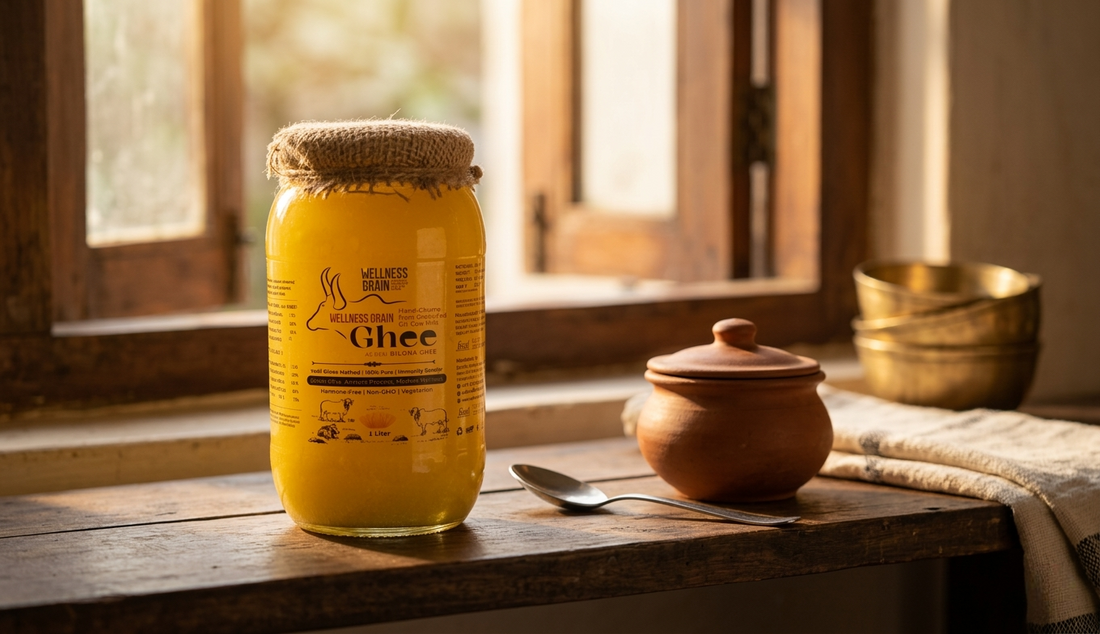
Ghee has been part of Indian kitchens for generations, valued for its rich aroma, cooking versatility, and long shelf life. Unlike many other dairy products, ghee can remain stable for months when stored correctly.
However, improper storage can affect the taste, aroma, texture, and overall quality of ghee.
Many people assume ghee never spoils. While pure ghee is naturally stable, poor storage practices can lead to oxidation, moisture contamination, or loss of aroma.
Understanding how to store ghee properly helps preserve its quality and ensures that every spoon retains the authentic flavour and benefits of traditional ghee.
Why Ghee Has a Long Shelf Life
One reason ghee lasts longer than butter or milk is that it is almost pure milk fat.
During the clarification process, most water and milk solids are removed. This reduces the conditions required for bacterial growth.
Pure ghee typically contains:
-
very low moisture
-
stable fat structure
-
natural antioxidants
These properties make ghee one of the most shelf-stable fats used in cooking.
However, exposure to moisture, air, heat, or contamination can still reduce its quality over time.
The Ideal Way to Store Ghee
Keep Ghee in an Airtight Container
The most important storage rule is keeping ghee in an airtight container.
Exposure to air can lead to oxidation, which gradually affects flavor and aroma.
Glass jars, stainless steel containers, or food-grade ceramic jars are often preferred for long-term storage.
Store Ghee in a Cool and Dry Place
Ghee does not necessarily require refrigeration, but it should be stored in a cool, dry environment away from direct sunlight.
Excess heat can accelerate oxidation of fats, while humidity may introduce moisture contamination.
Kitchen cabinets away from cooking heat are usually ideal storage locations.
Avoid Introducing Moisture
Moisture is one of the biggest enemies of ghee quality.
Always use a dry spoon when taking ghee from the jar.
Introducing water into the container may promote microbial growth or spoilage.
This is especially important in humid climates where moisture levels are naturally higher.
Avoid Cross Contamination
Sometimes people use the same spoon for ghee and other ingredients while cooking. This can introduce food particles into the jar.
Food particles may spoil over time and affect the purity of the ghee.
Using a clean, dedicated spoon for ghee helps maintain freshness.
Should Ghee Be Refrigerated?
Refrigeration is not always necessary for ghee.
In traditional Indian households, ghee has often been stored at room temperature.
However, refrigeration can help in certain conditions:
-
very hot climates
-
long-term storage
-
large quantities of ghee
When refrigerated, ghee may solidify or become grainy. This does not affect its quality.
Simply bringing the jar to room temperature restores its normal texture.
How Long Can Pure Ghee Last?
Pure ghee can remain stable for 9 to 12 months or longer when stored properly.
Several factors influence shelf life:
-
quality of milk used
-
production method
-
storage conditions
-
exposure to air and moisture
Traditional bilona ghee prepared carefully often retains aroma for long periods because of slow heating and low moisture content.
👉 Read More
Bilona Ghee vs Cream-Based Ghee: Why the Method Matters More Than You Think
Signs That Ghee May Have Gone Bad
Although ghee has excellent shelf stability, it can degrade if stored incorrectly.
Possible signs of spoilage include:
-
sour or rancid smell
-
unusually bitter taste
-
visible mold growth (rare but possible with moisture contamination)
If any of these signs appear, it is best not to consume the product.
Why Aroma Preservation Matters
One of the most appreciated characteristics of authentic ghee is its rich nutty aroma.
Proper storage helps preserve these aromatic compounds.
Exposure to air and heat may gradually reduce aroma intensity.
That is why storing ghee carefully helps maintain the sensory qualities that make traditional ghee unique.
👉 Internal linking suggestion
Why Authentic A2 Bilona Ghee Smells and Tastes Different
Traditional Storage Practices in Indian Homes
Historically, ghee was stored in:
-
earthen pots
-
brass containers
-
steel jars
These materials helped keep the ghee protected from moisture and sunlight.
Even today, many households prefer glass or stainless steel containers because they are non-reactive and easy to clean.
Why Quality and Storage Go Hand in Hand
Storage alone cannot improve poor-quality ghee.
High-quality ghee made from good milk and proper processing naturally stores better.
Brands that focus on clean sourcing, careful clarification, and quality testing often produce ghee that remains stable longer.
👉 Internal linking suggestion
Inside a Ghee Quality Test: What Brands Should Be Checking
Final Thoughts
Ghee is one of the most stable and versatile cooking fats used in Indian kitchens. With proper storage, it can maintain its aroma, flavor, and quality for months.
Simple habits such as using a dry spoon, keeping the container sealed, and avoiding moisture can make a significant difference in preserving ghee.
Understanding how to store ghee properly ensures that every meal prepared with it retains the authentic richness that has made ghee a trusted ingredient for generations.
Shop :- Real A2 Bilona Ghee
