
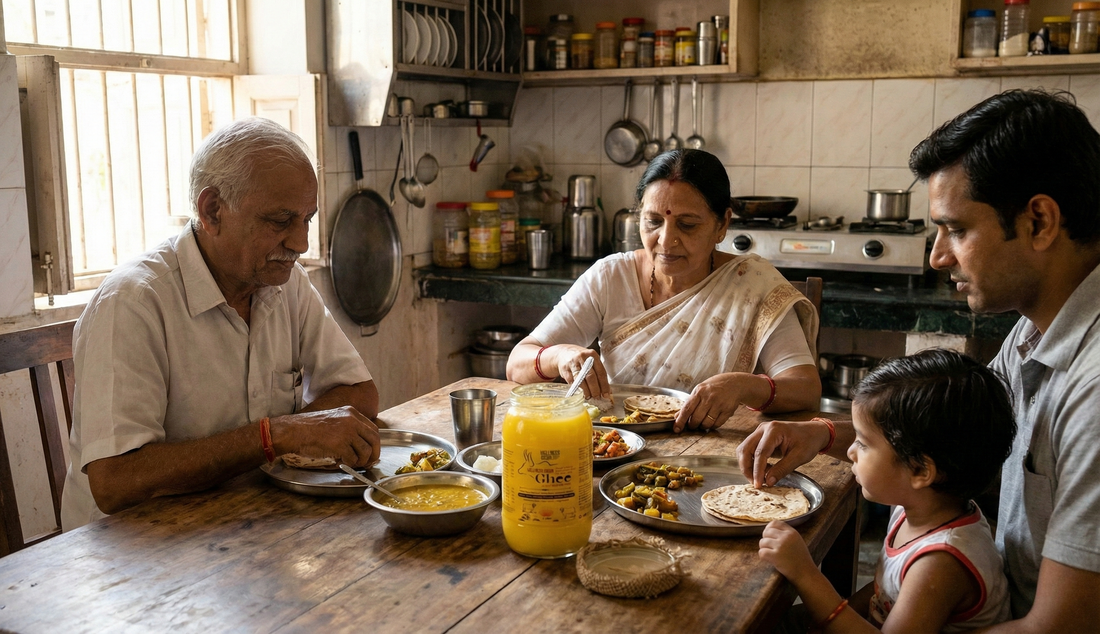
Postpartum nutrition in Indian households almost always circles back to one ingredient: ghee, often in larger quantities than before, and often pushed by every well-meaning relative in the house. Here is what actually changes for a breastfeeding mother's body, and what does not.
Why ghee is traditionally emphasised postpartum
Recovery after childbirth involves healing, increased energy needs, and, for breastfeeding mothers, the added energy demand of milk production. Ghee is calorie-dense and easy to digest for most people, which fits a traditional postpartum diet built around nourishing, warming, easy-to-digest foods.
Does ghee directly affect breast milk?
There is no strong evidence that eating more ghee specifically changes the composition or quantity of breast milk in a meaningful way. What ghee does provide is easily accessible calories at a time when a mother's overall energy needs are genuinely higher, which is a reasonable, if indirect, connection.
A more grounded way to think about it
- Ghee can be a useful, calorie-dense addition to a postpartum diet, not a milk-boosting remedy
- Overall diet quality, hydration, rest, and adequate calorie intake matter more than any single ingredient
- More is not automatically better; a moderate daily amount fits into a balanced postpartum diet more sensibly than a dramatically increased quantity
What to actually check first
Every postpartum recovery is different, and some new mothers have specific dietary restrictions or conditions (gestational diabetes, for instance) that change what a sensible diet looks like. Check with your doctor or a dietitian about your specific postpartum nutrition plan rather than following a generic ghee quantity.
Keep reading
Shop Wellness Grain A2 Gir Cow Bilona Ghee
This article is for general information and isn't a substitute for medical advice. Please consult your doctor or a dietitian for postpartum nutrition guidance specific to you.


