
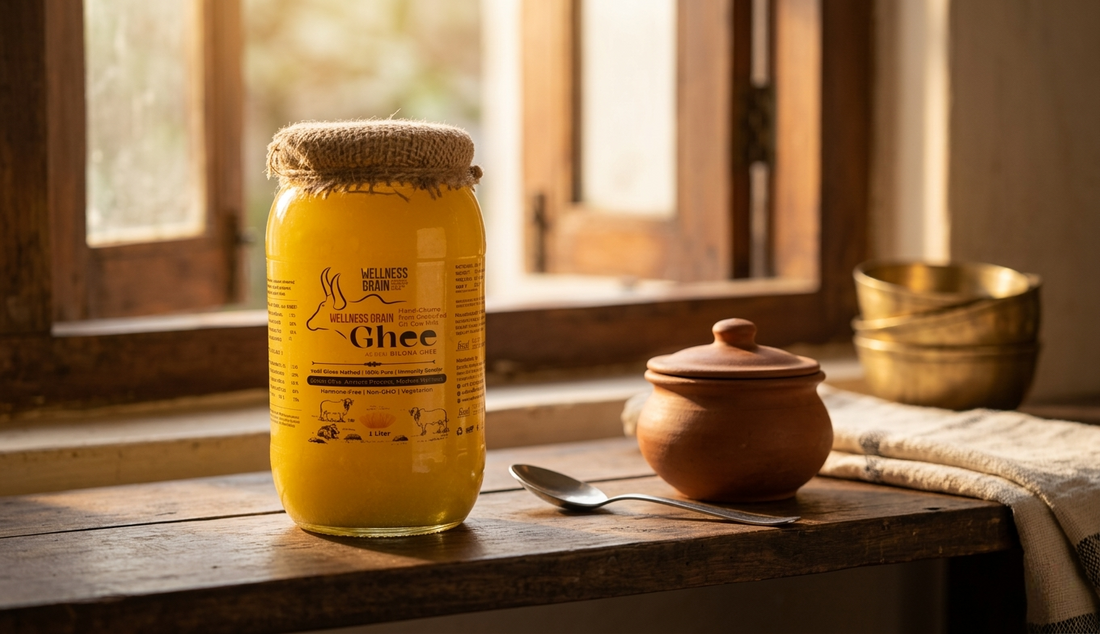
A tiny smear of ghee in a baby's first bowl of khichdi is one of the most consistent traditions across Indian weaning practices, passed down almost without question. Here is a more careful look at the when and how.
When can babies have ghee?
Ghee is often introduced during the weaning stage, generally after 6 months, once a baby has started solids and shown no adverse reactions to earlier foods. There is no universal single answer, since guidance varies by paediatrician and region, which is exactly why this decision should be made with your own child's paediatrician, not a generic timeline.
Why ghee, specifically, for weaning
Ghee is calorie-dense, which matters for a baby whose stomach is tiny but whose energy needs are relatively high. It is also naturally free of milk proteins and lactose (both are removed during the clarifying process), which is one reason it is often considered gentler than butter for babies who may be sensitive to dairy proteins.
How much, and how
- Start with a very small amount, less than a quarter teaspoon, mixed into a familiar food like khichdi or mashed dal-rice
- Introduce it on its own, without other new foods at the same time, so you can watch for any reaction
- Increase gradually only if your paediatrician has given the go-ahead and the baby tolerates it well
What to watch for
As with any new food, watch for signs of an allergic reaction, though ghee itself is rarely a common allergen given its minimal protein content. Any persistent digestive upset after introducing it is worth mentioning to your paediatrician.
The one thing to always do first
Talk to your paediatrician before introducing ghee (or any new food) to your baby's diet, since the right timing and quantity depends on your individual child's growth, health history and any existing conditions.
Keep reading
Shop Wellness Grain A2 Gir Cow Bilona Ghee
This article is for general information and isn't a substitute for medical advice. Please consult your paediatrician before introducing ghee or any new food to your baby.


