
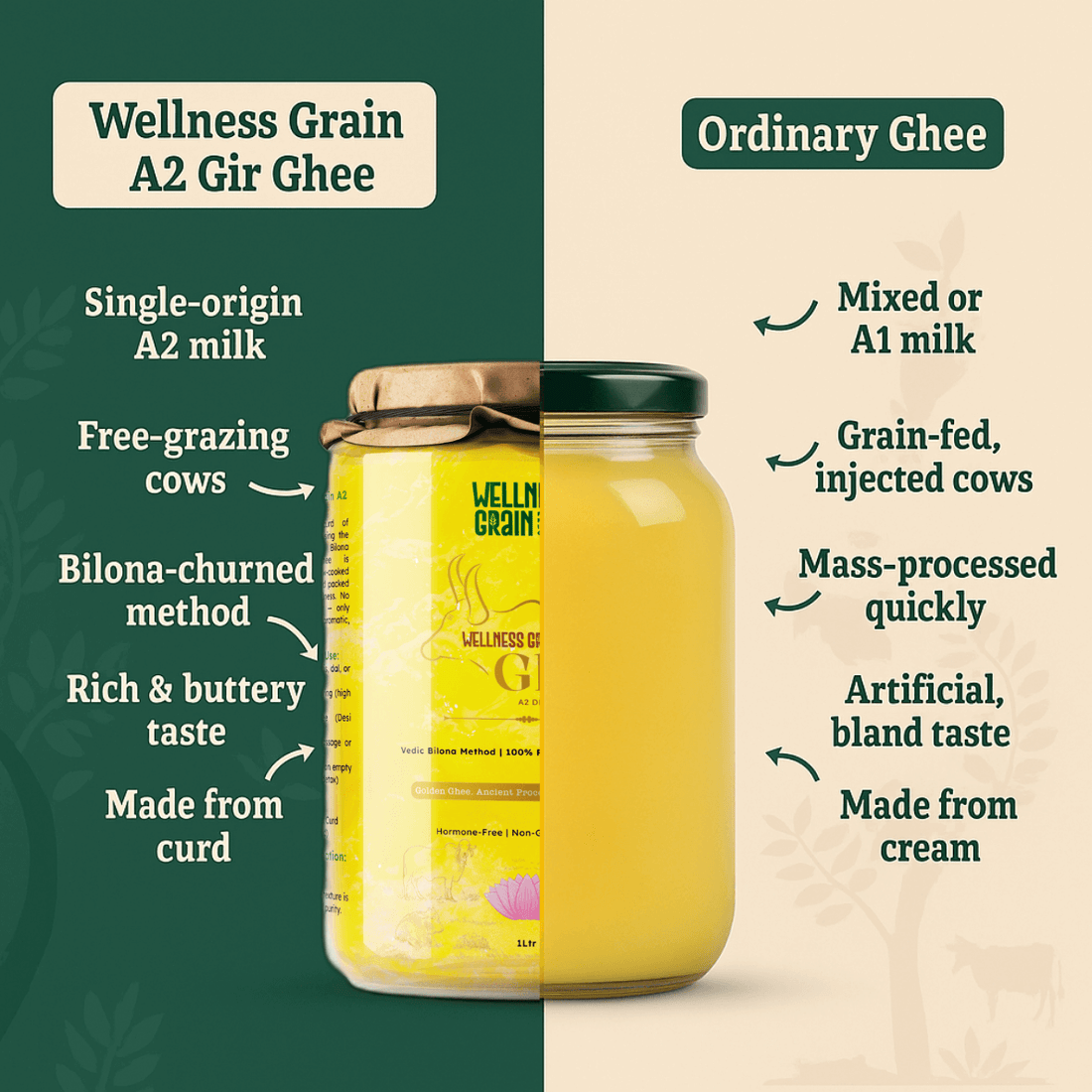
"A2 ghee" gets thrown around as a marketing term often enough that the actual science behind it gets lost. It is a real, specific genetic difference in cow's milk, and understanding it explains why the distinction is not just branding.
It starts with a protein, not a marketing team
Cow's milk contains a protein called beta-casein, and it comes in a few genetic variants, the two most relevant being A1 and A2. Which variant a cow produces depends on her genetics, specifically a single amino acid difference at one position in the protein chain.
What the difference actually is
A1 beta-casein has a histidine at that position; A2 beta-casein has a proline. That one-letter genetic difference changes how the protein breaks down during digestion, specifically affecting whether a peptide called BCM-7 is released.
Why this matters to some people
Some research has looked at whether A1 milk's digestion byproducts are linked to digestive discomfort in certain individuals, while A2 milk does not produce the same byproduct in the same way. This is an active area of nutrition research, not a fully settled scientific consensus, and individual responses vary.
Which cows produce which
Indigenous Indian cattle breeds, including Gir cows, are predominantly A2. Many modern crossbred and European dairy breeds carry a mix of A1 and A2 genetics, which is part of why sourcing from indigenous breeds specifically is central to how A2 ghee is marketed.
Does this affect ghee specifically?
Ghee is clarified butter with the milk solids, including most casein, removed during the clarifying process. This is worth being direct about: because ghee has very little protein left in the final product, the A1 vs A2 distinction is far more relevant to drinking milk than to ghee itself. Many people choose A2 ghee for the broader story of indigenous-breed sourcing and traditional bilona production, rather than the beta-casein content of the final product.
Keep reading
Shop Wellness Grain A2 Gir Cow Bilona Ghee
This article is for general information and isn't a substitute for medical or nutritional advice.


