
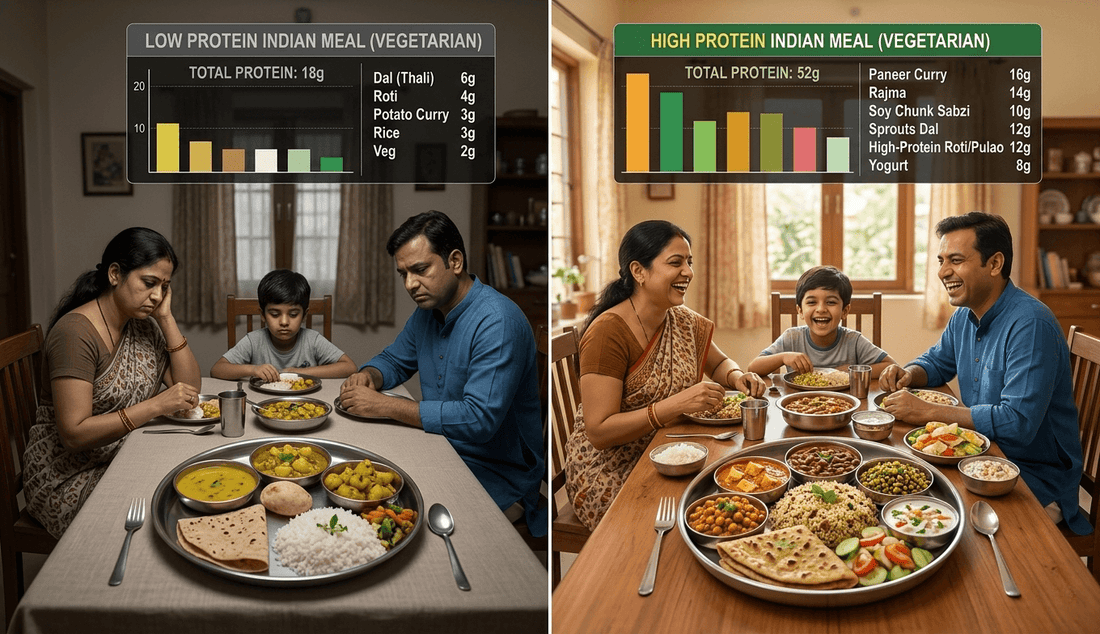
Most people rely on roti, rice, and dal, assuming it’s enough. But when you actually calculate protein intake, most Indian diets fall short leading to fatigue, weight gain, hair fall, and low energy.
The good news? You don’t need to change your entire diet. You just need to choose the right foods and use them correctly.
Let’s break down the best high protein vegetarian foods in India that you can easily include in your daily meals.
Protein is essential for:
- Maintaining energy throughout the day
- Muscle strength and recovery
- Hair growth and skin health
- Hormonal balance
- Weight management
It’s not just for gym-goers—everybody needs protein daily.
Top 10 High Protein Vegetarian Foods in India
Here are the most effective and practical protein-rich vegetarian foods:
1. Lentils (Dal)
Protein: ~6–8g per katori
Dal is a staple in every Indian household. But most people consume it in small quantities, which limits protein intake.
👉 Tip: Treat dal as a main dish, not just a side.
2. Chickpeas (Chana)
Protein: ~15g per cup
Chana is affordable, filling, and rich in both protein and fiber.
👉 Use in: Chana masala, salads, roasted snacks
3. Paneer (Cottage Cheese)
Protein: ~18g per 100g
Paneer is one of the best high-quality vegetarian protein sources.
👉 Helps in muscle maintenance and keeps you full longer
4. Soya Chunks / Tofu
Protein: ~15–20g per 100g
Among the highest protein vegetarian foods available.
👉 Best used in rotation with other protein sources
5. Sprouts (Moong, Chana)
Protein: ~7–9g per cup
Sprouting improves protein absorption and digestion.
👉 Ideal for breakfast or snacks
6. Peanuts
Protein: ~25g per 100g
One of the cheapest and most accessible protein sources.
👉 Great for quick snacks and energy boosts
7. Curd (Dahi)
Protein: ~8–10g per cup
Also supports gut health and digestion.
👉 Easy to include in lunch or dinner
8. Besan (Gram Flour)
Protein: ~20g per 100g
A powerful but underrated protein source.
👉 Use in: Cheela, kadhi, snacks
9. Rajma (Kidney Beans)
Protein: ~8–9g per cup
Rich in protein and fiber, making it great for satiety.
👉 Best paired with rice for better protein quality
10. High Protein Atta (Daily Upgrade)
Protein: Higher than regular atta
Since roti is consumed daily, improving the quality of atta is one of the easiest ways to increase protein intake without changing eating habits.
Are Vegetarian Proteins Enough?
Yes—but only when consumed smartly.
Most plant proteins are incomplete, meaning they lack some essential amino acids. But combining foods makes them complete.
Examples:
- Dal + roti
- Rice + rajma
- Chana + grains
This is how you maximize protein absorption.
How to Increase Protein in a Vegetarian Indian Diet
You don’t need expensive foods or supplements. Focus on these simple strategies:
1. Add Protein to Every Meal
Don’t rely on just one source per day.
2. Improve Portion Sizes
Slightly increasing dal, paneer, or legumes can make a big difference.
3. Upgrade Daily Staples
Small improvements in everyday foods like atta can significantly increase total intake.
4. Fix Your Breakfast
Most Indian breakfasts are low in protein. Add besan, sprouts, or protein-rich options.
5. Avoid Carb-Only Meals
Meals like plain poha or white rice lack sufficient protein unless paired properly.
Sample High Protein Vegetarian Diet (Indian Example)
Breakfast:
Besan chilla + curd → ~15g
Lunch:
Roti + dal + paneer sabzi → ~20g
Snack:
Roasted peanuts or chana → ~10g
Dinner:
Roti + rajma or sprouts → ~18g
👉 Total: ~60g protein
Common Mistakes Vegetarians Make
- Depending only on dal
- Ignoring protein in breakfast
- Eating protein only once a day
- Not combining foods properly
- Underestimating portion sizes
Final Thoughts
A vegetarian diet can easily meet your protein needs—if done correctly.
The problem is not lack of options.
The problem is lack of awareness.
Once you start making small changes, your protein intake—and overall health—can improve significantly.


