
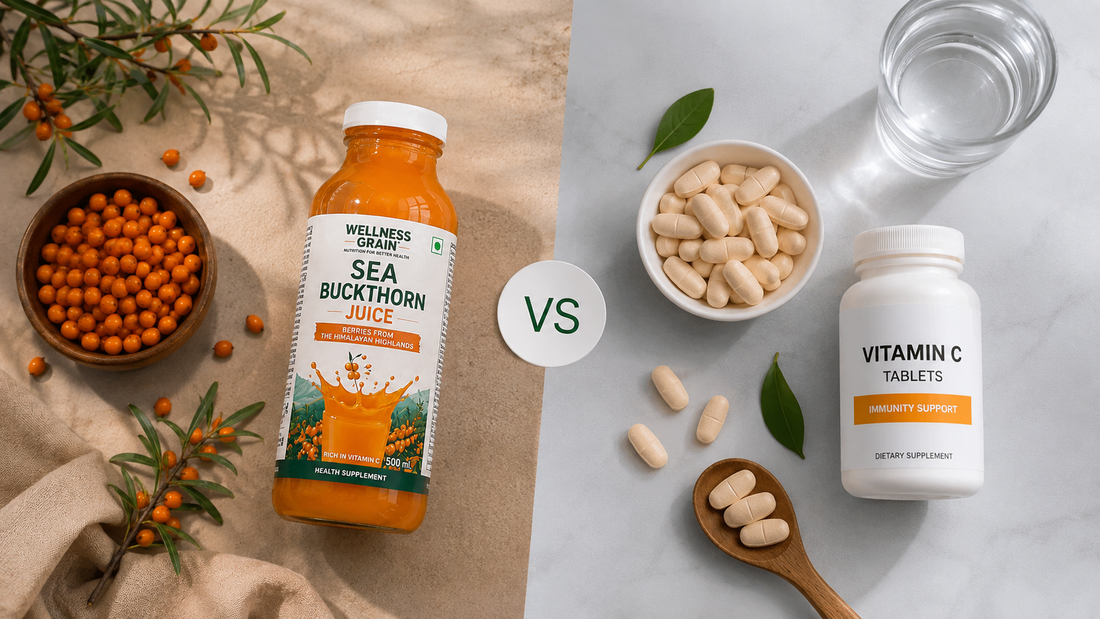
If you're deciding between a Vitamin C tablet and a natural source like sea buckthorn juice, the two aren't quite interchangeable — they work differently and offer different things beyond the vitamin itself.
What a Vitamin C tablet gives you
Tablets offer a precise, measured dose of isolated ascorbic acid. They're convenient, shelf-stable, and useful when you specifically want a known quantity of just Vitamin C.
What sea buckthorn juice gives you
Sea buckthorn is a whole-food source, meaning the Vitamin C comes packaged with the fruit's other natural compounds — Omega 3, 6, 7 and 9 fatty acids, carotenoids, and flavonoids — rather than as an isolated nutrient.
Key differences at a glance
- Form: tablets are synthetic or isolated; sea buckthorn juice is a whole-fruit extract
- Additional nutrients: tablets typically contain only Vitamin C (sometimes with fillers); sea buckthorn juice carries its full natural profile
- Taste and ritual: tablets are flavourless and quick; juice becomes part of a daily drinking habit
- Dosing precision: tablets offer an exact milligram count; juice varies more naturally batch to batch
Which should you choose?
If you want a precise, isolated dose, a tablet is the simpler choice. If you'd rather get your Vitamin C from a whole food alongside other naturally occurring compounds, sea buckthorn juice is worth considering as part of your routine — the two aren't mutually exclusive either.
Related reading
- Sea buckthorn juice for immunity
- Sea buckthorn juice: the complete guide
- How to drink sea buckthorn juice
Shop Wellness Grain Sea Buckthorn Juice
This article is for general wellness information and isn't a substitute for medical advice.


