
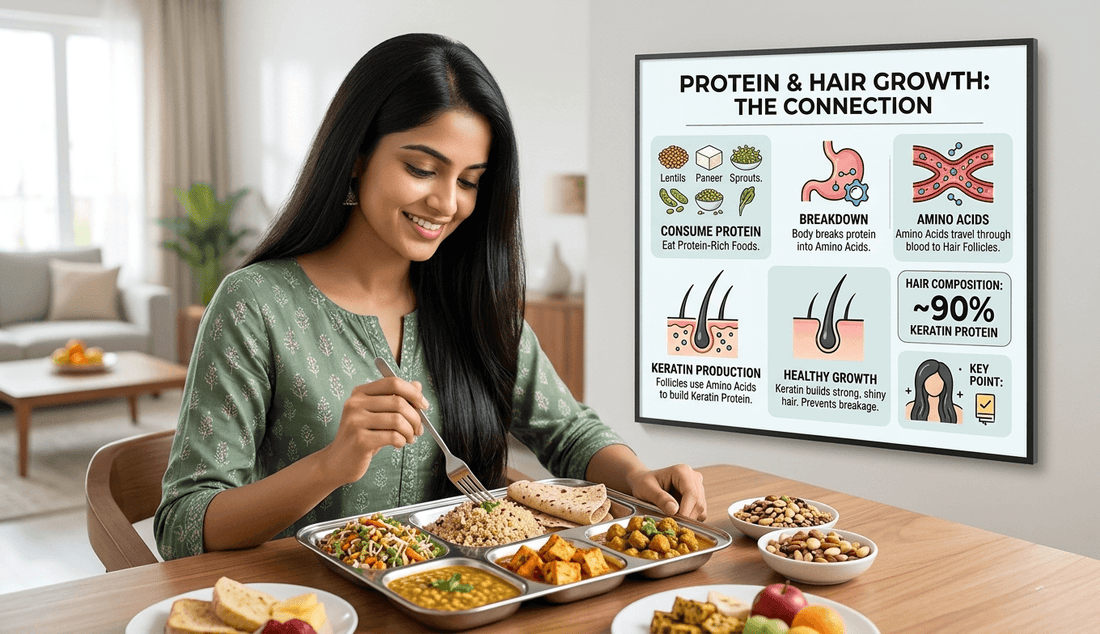
Hair fall has become one of the most common health concerns today.
Many people try different shampoos, oils, and treatments hoping to stop hair loss. While these may help with scalp care, one major factor is often overlooked — nutrition, especially protein intake.
Hair is primarily made of a protein called keratin, which means your diet plays a critical role in maintaining strong and healthy hair.
When the body does not receive enough protein, hair growth can slow down and hair fall may increase.
Why Protein Is Important for Hair Growth
Hair follicles require nutrients to grow new strands and maintain existing ones.
Protein helps support:
- Hair structure and strength
- Hair follicle growth
- Tissue repair
- Hormonal balance related to hair health
Without adequate protein intake, the body prioritizes essential functions first. As a result, hair growth can be affected.
How Protein Deficiency Causes Hair Fall
When protein intake is too low, the body may shift hair follicles from the growth phase to the shedding phase.
This condition is often referred to as telogen effluvium, where more hair than usual enters the resting phase and eventually falls out.
Common signs of protein-related hair problems include:
- Increased hair shedding
- Thinning hair
- Slow hair growth
- Weak and brittle hair strands
These symptoms may appear gradually if dietary protein intake remains low over time.
How Much Protein Do You Need for Healthy Hair?
Protein requirements depend on body weight and lifestyle.
A commonly recommended guideline is:
👉 0.8–1 gram of protein per kilogram of body weight
For example:
- 55 kg person → about 44–55 grams of protein per day
Ensuring consistent intake across meals helps provide the nutrients hair follicles need for healthy growth.
Best High-Protein Foods for Hair Growth (Vegetarian India)
Many vegetarian foods can support adequate protein intake.
Some commonly available options include:
- Lentils (dal)
- Chickpeas (chana)
- Paneer
- Sprouts
- Curd (dahi)
- Besan (gram flour)
- Peanuts and nuts
- Legumes such as rajma
Including these foods regularly can support overall nutrition and hair health.
A Simple Protein-Rich Day for Hair Health
Here is an example of how protein can be distributed across meals.
Breakfast
Besan chilla with curd
Lunch
Roti with dal and paneer sabzi
Evening Snack
Roasted chana or peanuts
Dinner
Roti with sprouts or legumes
Balanced meals like this provide nutrients that contribute to healthy hair growth.
Other Nutrients That Support Hair Growth
While protein is essential, hair health also depends on several other nutrients.
Important nutrients include:
- Iron
- Zinc
- Vitamin D
- Biotin
- Omega-3 fatty acids
A balanced diet containing a variety of whole foods helps support these requirements.
Common Mistakes That Can Worsen Hair Fall
Some lifestyle habits may unintentionally contribute to hair loss.
These include:
- Very low-calorie dieting
- Skipping meals regularly
- High intake of processed foods
- Lack of protein in daily meals
Focusing on balanced nutrition can help reduce these risks.
Small Changes That Can Help Improve Hair Health
Improving hair health often begins with consistent nutrition.
Helpful strategies include:
- Adding protein to every meal
- Increasing intake of lentils and legumes
- Avoiding extreme dieting
- Maintaining overall balanced nutrition
These simple adjustments can support healthier hair over time.
Final Thoughts
Hair health is closely connected to overall nutrition.
While external treatments may improve scalp care, strong hair growth depends heavily on the nutrients your body receives.
Ensuring adequate protein intake through balanced meals can support stronger hair, improved hair growth, and better overall wellbeing.
