
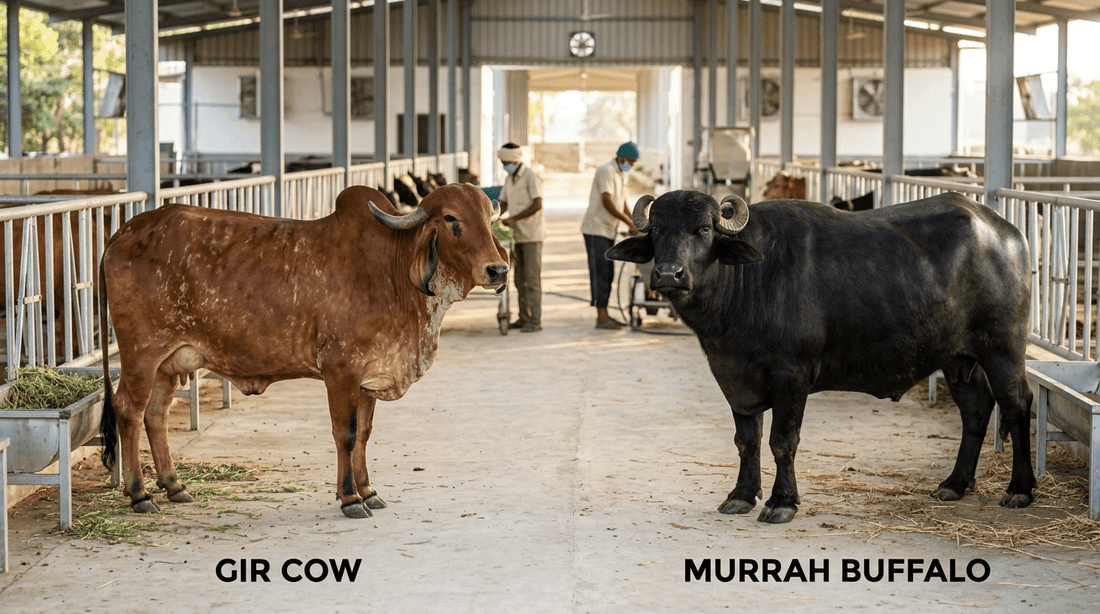
Introduction
One of the most common questions Indian families ask today is:
👉 “Should I choose cow ghee or buffalo ghee?”
Both have been part of traditional Indian diets for generations. But they differ significantly in:
- Texture
- Taste
- Digestion
- Fat composition
- Cooking experience
Some people prefer the lighter feel of cow ghee, while others enjoy the richness and creaminess of buffalo ghee.
So which one is actually better?
The answer depends on:
- Your lifestyle
- Cooking habits
- Digestion
- Personal preference
This guide explains the practical differences between cow ghee and buffalo ghee so you can make an informed choice.
What Is Cow Ghee?
Cow ghee is made from cow milk butter.
Traditional A2 cow ghee is often prepared using:
- Curd fermentation
- Bilona churning
- Slow heating
Cow ghee is usually:
- Golden yellow in color
- Lighter in texture
- Easier to spread
What Is Buffalo Ghee?
Buffalo ghee is made from buffalo milk butter.
Buffalo milk naturally contains:
- Higher fat content
- More creaminess
- Denser texture
As a result, buffalo ghee is generally:
- White or off-white
- Thicker
- Richer and heavier
Texture and Taste Difference
Cow Ghee
- Light texture
- Nutty aroma
- Softer consistency
Buffalo Ghee
- Creamier texture
- Rich mouthfeel
- Dense consistency
Buffalo ghee often feels richer in dishes like:
- Paratha
- Halwa
- Traditional sweets
Which Ghee Feels Easier to Digest?
Many people find cow ghee easier to digest because:
- It feels lighter
- Has lower fat density
- Spreads more easily in meals
Buffalo ghee may feel heavier if consumed in larger quantities.
👉 Related reading: Why A2 Ghee Feels Light on the Stomach
Fat Content Difference
Buffalo milk naturally contains more fat than cow milk.
This means buffalo ghee is generally:
- More calorie dense
- Heavier in texture
- Richer in taste
Cow ghee tends to feel lighter for daily use.
Which Is Better for Daily Cooking?
Cow Ghee Works Well For:
- Daily meals
- Dal and roti
- Rice
- Khichdi
Buffalo Ghee Works Well For:
- Rich traditional dishes
- Sweets
- Winter foods
- Heavy meals
Which Ghee Is Better for Kids?
Both can be consumed in moderation.
However, many families prefer cow ghee for daily use because it:
- Feels lighter
- Mixes well with regular meals
- Is easier to consume regularly
Which Ghee Is Better for Muscle Gain?
Buffalo ghee contains:
- Higher fat content
- Higher calorie density
This may make it preferable for:
- High-calorie diets
- Bulking diets
- Physically active individuals
Why Color Difference Happens
Many people think white ghee is fake.
That is incorrect.
Cow Ghee
Usually yellow due to beta-carotene.
Buffalo Ghee
Usually white because buffalo milk contains less beta-carotene.
Which One Should You Choose?
Choose based on your preference and lifestyle.
Choose Cow Ghee If:
✔ You want lighter digestion
✔ You use ghee daily
✔ You prefer mild aroma
Choose Buffalo Ghee If:
✔ You enjoy richer taste
✔ You prefer dense texture
✔ You cook traditional heavy dishes
Final Thoughts
There is no universal “best” ghee.
Both cow ghee and buffalo ghee have:
- Traditional importance
- Culinary value
- Different strengths
The key is:
👉 Quality
👉 Authenticity
👉 Moderate usage
Choosing pure, well-made ghee matters more than simply choosing one type over another.


