
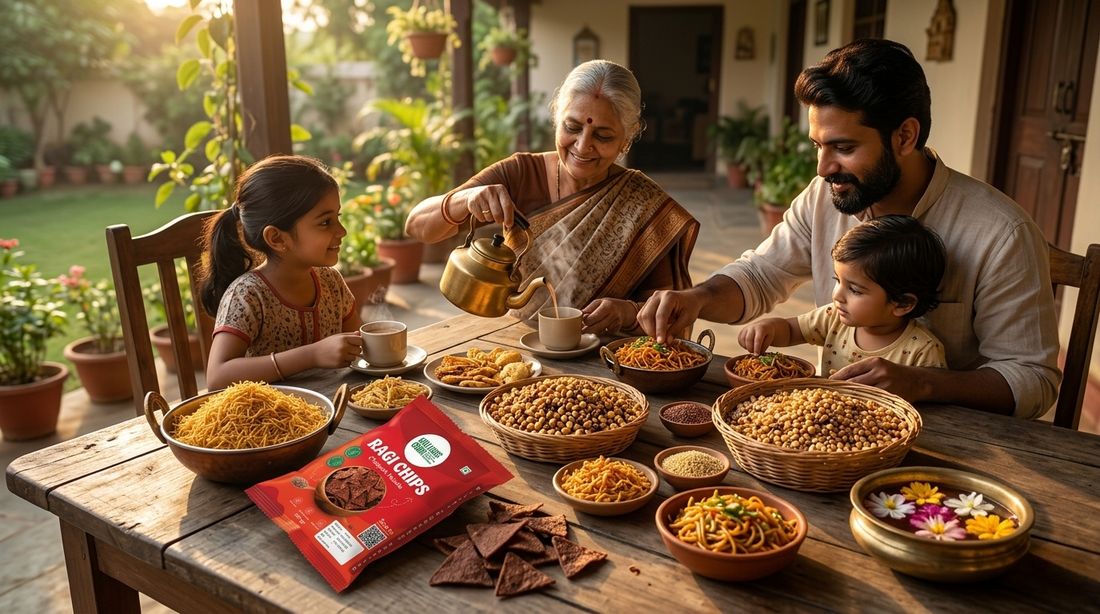
Millet snacks are becoming extremely popular in India.
From:
- Millet bhujia
- Millet chips
- Millet noodles
many products today are marketed as “healthy.”
But are all millet snacks actually healthy?
Not always.
Some millet snacks still contain:
- Refined starch
- Excess oil
- Artificial flavoring
- High sodium
This guide explains what consumers should actually look for before buying millet snacks.
Why Millet Became Popular
Millets are traditional grains known for:
- Fiber
- Mineral content
- Slow digestion
They gained popularity because people started looking for alternatives to:
- Maida snacks
- Deep-fried namkeen
- Highly processed foods
The Problem With “Healthy” Marketing
Many snack brands use:
- “Millet” labeling
- Earthy packaging
- Health-focused messaging
But the actual product may still contain:
- Refined flour
- Palm oil
- High seasoning content
👉 Millet alone does not automatically make a snack healthy.
What Makes a Millet Snack Better?
Higher Millet Percentage
Look for products where millet is a primary ingredient.
Lower Refining
Less processed ingredients usually retain better nutrition.
Controlled Oil Usage
Excess oil can reduce the nutritional advantage.
Balanced Ingredients
Good millet snacks combine:
- Millet flour
- Pulses
- Natural spices
Why Millet Snacks Feel Lighter
Many people feel millet snacks are easier on digestion because:
- Millets digest slower
- Fiber improves satiety
- They may feel less greasy than traditional namkeen
Are Millet Snacks Good for Kids?
Millet snacks can be better alternatives when:
✔ Ingredient quality is good
✔ Oil usage is controlled
✔ Portion size is balanced
What Consumers Should Check on Labels
Before buying millet snacks:
✔ Ingredient list
✔ Oil type
✔ Sodium level
✔ Millet percentage
Final Thoughts
Millet snacks can absolutely be a smarter snacking option.
But:
👉 The ingredient quality matters more than the marketing label.
Choosing cleaner, balanced millet snacks helps consumers enjoy:
- Better satiety
- Better ingredient quality
- More mindful snacking


