
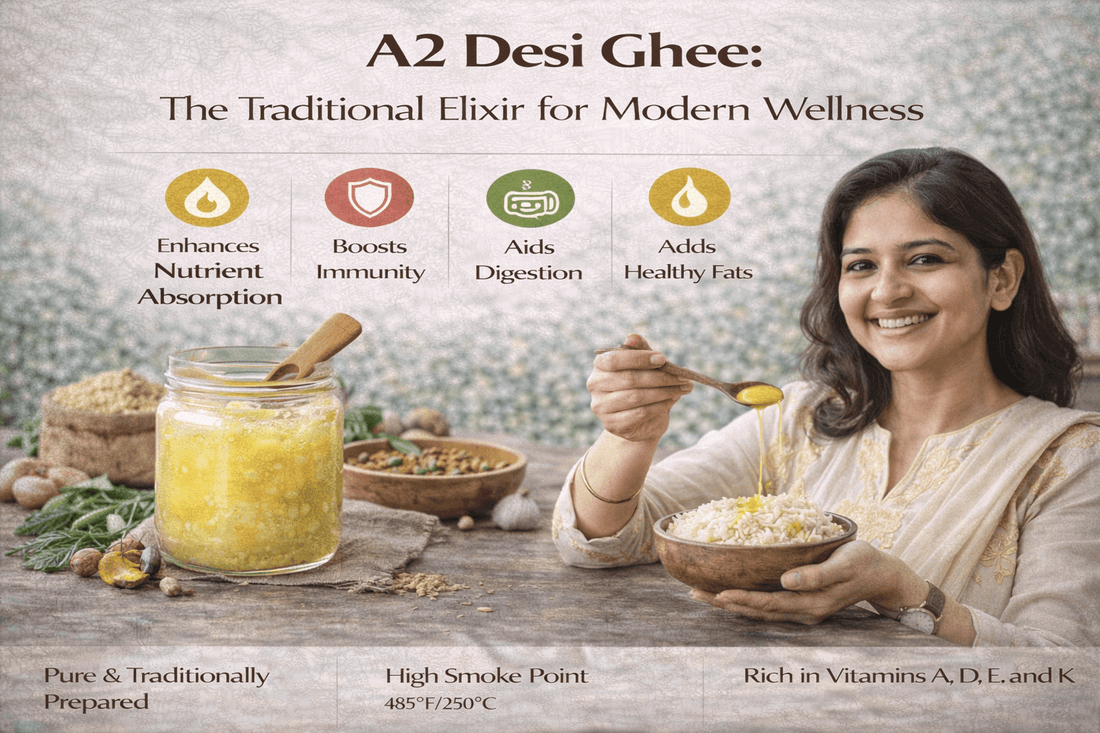
In Indian households, ghee has long been valued as more than a cooking ingredient—it represents nourishment, balance, and tradition. As modern diets become increasingly processed, many families are revisiting traditional fats such as A2 Desi Ghee, especially those prepared using time-tested methods.
But what exactly makes A2 ghee different, and why has it gained renewed relevance today? This article explores the origins, preparation, and everyday role of A2 Desi Ghee—without marketing hype, just clear understanding.
Why More Consumers Are Seeking Pure A2 Ghee
Today’s consumers are more aware of food sourcing and processing than ever before. With rising concerns around adulteration and industrial shortcuts, many people are actively looking for ghee that is:
-
Made from indigenous cow milk
-
Prepared using traditional methods
-
Free from preservatives and artificial additives
The bilona method, which involves churning curd rather than cream, is one of the key markers people now look for when choosing ghee.
For a detailed explanation of this process, you can refer to our complete guide on
What Is A2 Bilona Ghee and How Is It Made?
What Makes A2 Desi Ghee Different?
A2 Desi Ghee is made from milk that naturally contains A2 beta-casein protein, commonly found in indigenous Indian cow breeds such as Gir cows.
When this milk is fermented into curd and churned using the bilona method, the resulting ghee differs from industrial ghee in several ways:
-
It follows a curd-based preparation, not cream separation
-
It is cooked slowly at low temperatures
-
It retains its natural aroma and texture
These factors influence not only taste, but also how the ghee behaves during cooking and digestion.
Traditional Preparation vs Industrial Processing
| Aspect | Traditional A2 Bilona Ghee | Industrial Ghee |
|---|---|---|
| Milk source | Indigenous A2 cows | Often mixed or crossbred |
| Method | Curd-churned (bilona) | Cream separation |
| Cooking | Slow, low heat | High-temperature processing |
| Texture & aroma | Rich, grainy, aromatic | Neutral or flat |
| Use | Daily Indian cooking | Mass consumption |
Understanding this difference helps consumers choose ghee that aligns with traditional dietary practices.
The Role of Grass-Fed Indigenous Cows
The quality of ghee begins with what the cow eats. Indigenous cows that graze naturally on grass and fodder tend to produce milk with a different fat composition compared to cows raised on commercial grain-based feed.
This is why many traditional producers prefer milk from grass-fed indigenous cows, particularly for bilona ghee.
You can read a deeper breakdown here:
Grass-Fed vs Grain-Fed Ghee: What’s the Difference?
How A2 Ghee Fits into Everyday Indian Cooking
A2 Desi Ghee has been traditionally used for:
-
Tadka and sautéing
-
Cooking dals and vegetables
-
Adding to rotis, rice, and khichdi
Because of its natural stability at higher temperatures, it remains a preferred cooking fat in many Indian kitchens when used in moderation.
Families who follow traditional preparation methods often choose products like
A2 Gir Cow Bilona Ghee
for regular household use.
Choosing A2 Ghee Mindfully
When selecting A2 ghee, consider:
-
Clear disclosure of cow breed
-
Mention of bilona or curd-churned method
-
Transparency about sourcing and processing
-
FSSAI registration and lab testing
Avoid relying only on labels such as “organic” or “pure” without process clarity.
Conclusion
A2 Desi Ghee represents a return to slow, transparent food practices that prioritize source and method over speed and scale. Understanding how ghee is made—and where it comes from—allows consumers to make informed choices that align with traditional Indian cooking and modern awareness.
When evaluating options, focusing on preparation method, cow breed, and transparency matters far more than marketing claims.


