
Introduction
Many people notice something interesting when storing ghee for a few days or weeks.
The texture begins to change.
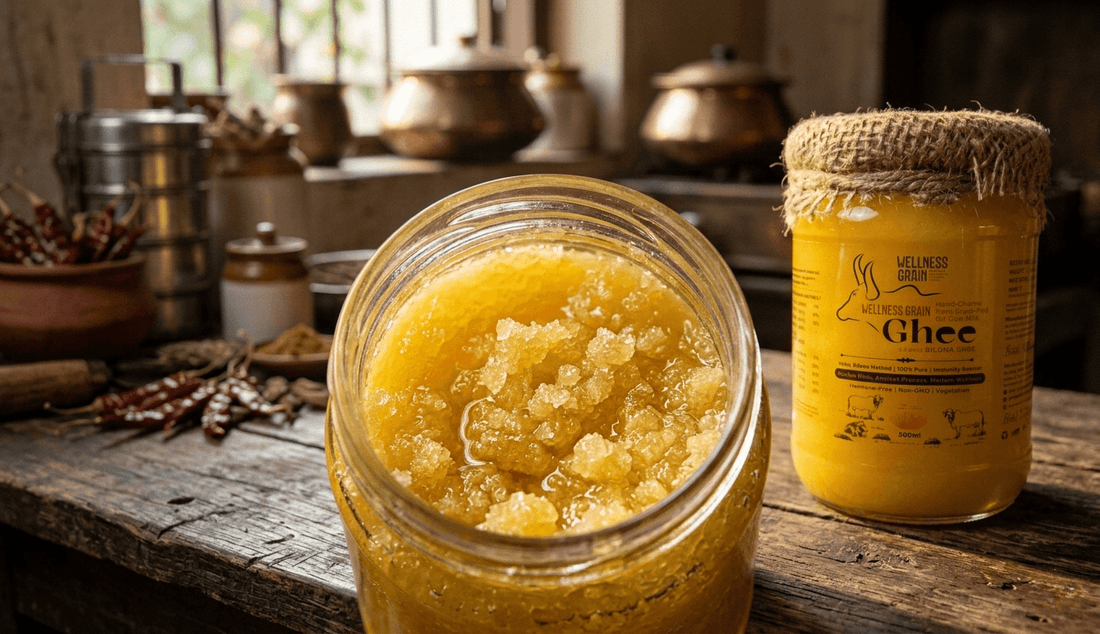
Instead of looking smooth and creamy, the ghee may become slightly grainy or crystalline.
This often raises questions such as:
- Is grainy ghee spoiled?
- Does crystallized ghee mean poor quality?
- Should ghee always stay smooth?
In reality, grainy ghee is completely normal and can even be a sign of traditional preparation.
Understanding why ghee develops this texture helps consumers distinguish between natural behavior and actual quality issues.
What Does Grainy Ghee Mean?
Grainy ghee refers to the formation of small fat crystals that appear when ghee cools and solidifies.
These tiny crystals give ghee a slightly granular texture instead of a perfectly smooth surface.
This phenomenon is called fat crystallization.
It is a natural physical process that occurs in many fats, including butter and ghee.
Why Ghee Forms Crystals
The texture of ghee depends on how milk fat molecules arrange themselves during cooling.
Milk fat contains many different fatty acids that solidify at different temperatures.
As the ghee cools:
- Some fats solidify first
- Others crystallize later
- The structure forms tiny grains
This is what creates the characteristic grainy texture.
Why Traditional Ghee Often Becomes Grainy
Traditional bilona ghee is more likely to develop graininess because:
- It undergoes slow heating
- Milk fat remains structurally intact
- Processing is minimal
These factors allow natural fat crystals to form when the ghee cools.
👉 Related reading:
Bilona Ghee vs Cream-Based Ghee: Why the Method Matters
Why Some Commercial Ghee Looks Perfectly Smooth
Industrial ghee production sometimes results in smoother texture because:
- Heating is done rapidly
- Cooling is controlled
- Processing alters fat structure
While smooth texture is not necessarily bad, it may indicate more intensive processing.
Does Grainy Ghee Mean Better Quality?
Graininess alone does not guarantee purity, but it can suggest:
- Natural fat structure
- Traditional preparation
- Minimal processing
Authentic ghee often develops mild crystallization over time.
However, quality should always be evaluated using multiple factors such as:
- Aroma
- Source of milk
- Production method
- Quality testing
👉 Related reading:
Inside a Ghee Quality Test: What Brands Should Be Checking
Temperature and Storage Also Affect Texture
Ghee texture can change depending on temperature.
Warmer Temperatures
Ghee remains liquid and smooth.
Cooler Temperatures
Fat molecules solidify and form grains.
This is why ghee may appear:
- smooth in summer
- grainy in winter
How to Make Ghee Smooth Again
If you prefer a smoother texture, simply:
- Warm the ghee gently
- Allow it to melt
- Let it cool again
The texture will change naturally.
Importantly, this does not affect quality or nutrition.
Does Grainy Ghee Affect Taste?
No.
The taste and aroma of ghee remain unchanged.
In fact, traditionally made ghee often develops a richer aroma and deeper flavor over time.
👉 Related reading:
Why Authentic A2 Bilona Ghee Smells and Tastes Different
When Should You Actually Worry?
While graininess is normal, certain signs indicate poor quality:
- sour smell
- rancid odor
- mold growth
- unusual bitterness
These symptoms indicate spoilage rather than natural crystallization.
Why Understanding Ghee Texture Matters
Consumers often judge food quality based on appearance.
However, natural foods behave differently from heavily processed products.
Recognizing normal changes in ghee texture helps consumers:
- avoid unnecessary concerns
- appreciate traditional food behavior
- make informed purchasing decisions
Final Thoughts
Grainy ghee is a natural result of how milk fat crystallizes when cooled.
Rather than being a problem, it can reflect the natural structure of traditionally prepared ghee.
Understanding this small detail helps build greater confidence in recognizing authentic dairy products.
Shop :- A2 Gir Cow Bilona Ghee | Pure Desi Ghee for Digestion & Immunity – Wellness Grain
